
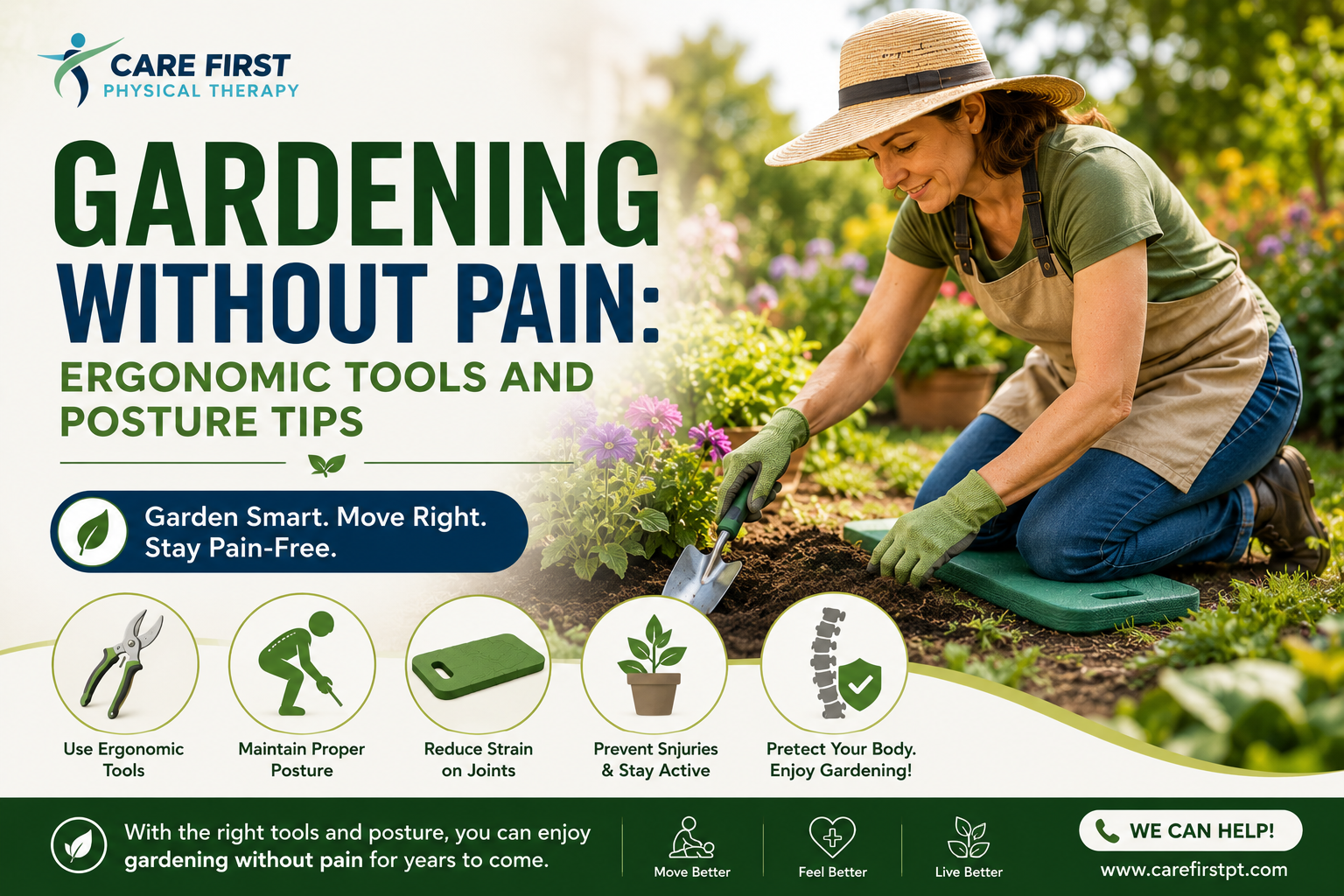
Gardening is one of the most relaxing and rewarding outdoor activities. It helps reduce stress, improves mental health, and keeps your body active. However, spending hours bending, kneeling, lifting, and digging can lead to discomfort, muscle strain, and long-term injuries if proper techniques are not used.
Many people experience back pain, shoulder strain, wrist discomfort, or knee pain after gardening. The good news is that gardening without pain is possible with the right ergonomic gardening tools, posture techniques, and movement habits.
At Care First PT, we understand how repetitive physical activities can affect your muscles and joints. That’s why we encourage safe movement strategies and injury prevention techniques that allow you to continue doing the activities you love.
In this complete guide, you’ll learn the best ergonomic tools for gardening, proper posture techniques, and expert tips to help you enjoy gardening without pain.
Why Gardening Causes Body Pain
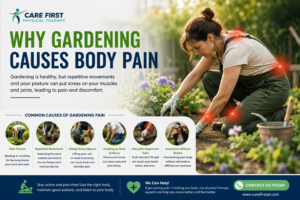
Gardening involves repetitive movements and awkward body positions that place stress on muscles and joints. Common gardening motions such as twisting, bending forward, kneeling, and lifting heavy objects can increase pressure on the spine and surrounding muscles.
Common Causes of Gardening Pain
- Poor posture while planting or weeding
- Repetitive bending and twisting motions
- Lifting heavy pots or soil bags incorrectly
- Using non-ergonomic gardening tools
- Working for long periods without breaks
- Weak core muscles and limited flexibility
According to the American Chiropractic Association, back pain is one of the most common musculoskeletal complaints among adults, and repetitive outdoor activities like gardening can increase the risk of strain and injury.
Practicing gardening without pain strategies can significantly reduce these risks while improving comfort and mobility.
You Can Also Read : Swallowing Safety (Dysphagia): Signs of Aspiration While Drinking
Benefits of Ergonomic Gardening
Using ergonomic tools and proper posture techniques offers several health benefits.
1. Reduces Stress on Joints
Ergonomic gardening tools are designed to reduce pressure on your wrists, elbows, knees, and shoulders.
2. Improves Body Posture
Maintaining proper posture during gardening helps protect your spine and reduces muscle fatigue.
3. Prevents Muscle Strain
Proper body mechanics lower the risk of overuse injuries and muscle soreness.
4. Makes Gardening More Comfortable
Pain-free gardening allows you to enjoy your hobby for longer periods without discomfort.
5. Supports Long-Term Mobility
Gardening without pain encourages safe movement patterns that support healthy aging and mobility.
Best Ergonomic Gardening Tools for Gardening Without Pain
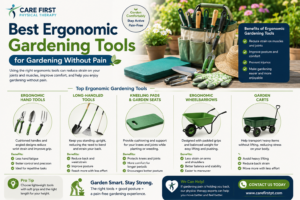
Investing in ergonomic gardening tools can dramatically improve your gardening experience. These tools are specially designed to fit the body’s natural movements and reduce physical strain.
Ergonomic Hand Tools
Ergonomic hand tools are designed with soft grips, angled handles, and lightweight materials to reduce stress on the wrists and hands.
Best Ergonomic Hand Tools Include:
- Ergonomic pruners
- Cushioned trowels
- Angled weeders
- Soft-grip cultivators
These tools are especially helpful for individuals with arthritis, wrist pain, or reduced hand strength.
Benefits:
- Better grip control
- Reduced wrist strain
- Less hand fatigue
- Improved comfort during repetitive tasks
Using ergonomic hand tools is one of the easiest ways to practice gardening without pain.
Long-Handled Gardening Tools
Long-handled tools help reduce excessive bending and allow you to maintain a more upright posture.
Recommended Long-Handled Tools:
- Long-handled rakes
- Extended hoes
- Lightweight shovels
- Adjustable weed pullers
Benefits:
- Reduces lower back strain
- Minimizes bending
- Improves spinal alignment
- Enhances overall comfort
These ergonomic gardening tools are ideal for preventing back pain while gardening.
Kneeling Pads and Garden Seats
Kneeling for long periods can place excessive pressure on the knees and lower back.
Helpful Accessories:
- Foam kneeling pads
- Foldable garden stools
- Adjustable gardening benches
- Rolling garden seats
Benefits:
- Protects knee joints
- Reduces discomfort
- Supports better posture
- Makes gardening more accessible
Using supportive kneeling equipment is essential for comfortable and pain-free gardening.
You Can Also Read : Foot Drop: Bracing vs. Strengthening (What’s Right for You?
Ergonomic Wheelbarrows and Garden Carts
Traditional wheelbarrows can strain the wrists, shoulders, and back.
Features to Look For:
- Padded handles
- Lightweight frame
- Two-wheel support system
- Adjustable handle height
Garden carts reduce heavy lifting and improve weight distribution, helping you maintain proper posture while transporting soil, plants, and tools.
Posture Tips for Gardening Without Pain
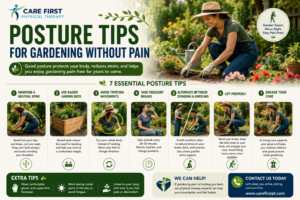
Proper posture plays a critical role in preventing injuries while gardening. Poor body mechanics can place stress on your spine, muscles, and joints.
1. Maintain a Neutral Spine
Keeping your spine in a neutral position helps reduce pressure on your lower back.
How to Do It:
- Bend from your hips instead of your waist
- Keep your shoulders relaxed
- Avoid slouching
- Tighten your core muscles while lifting
Maintaining a neutral spine is one of the most effective gardening posture tips for preventing back pain.
2. Use Raised Garden Beds
Raised garden beds reduce the need for excessive bending and kneeling.
Benefits of Raised Beds:
- Easier access to plants
- Reduced strain on knees and back
- Better posture support
- Improved comfort for older adults
Raised beds are an excellent solution for individuals looking to enjoy gardening without pain.
3. Avoid Twisting Movements
Twisting while lifting or reaching can strain the spine and surrounding muscles.
Safer Alternative:
- Turn your entire body instead of twisting
- Move your feet when changing directions
- Keep heavy objects close to your body
This simple adjustment can help prevent gardening injuries.
4. Take Frequent Breaks
Working continuously for long periods increases muscle fatigue and stiffness.
Recommended Break Routine:
- Take breaks every 20–30 minutes
- Stand up and stretch regularly
- Hydrate properly
- Change positions frequently
Regular breaks improve circulation and help reduce muscle soreness.
5. Alternate Between Standing and Kneeling
Switching positions prevents repetitive stress on the same muscles and joints.
Helpful Tip:
Use a kneeling pad when working close to the ground and alternate tasks throughout the gardening session.
This strategy helps maintain comfort while gardening without pain.
6. Lift Properly
Improper lifting is a major cause of back injuries during gardening.
Safe Lifting Techniques:
- Bend your knees
- Keep your back straight
- Hold objects close to your body
- Avoid sudden movements
- Engage your core muscles
Always ask for help when lifting heavy pots, soil bags, or gardening equipment.
Conclusion
Gardening should be enjoyable, relaxing, and beneficial for your health—not a source of pain and discomfort. By using ergonomic gardening tools, maintaining proper posture, and following safe movement techniques, you can significantly reduce the risk of injury.
Practicing gardening without pain not only protects your muscles and joints but also helps you continue enjoying your favorite outdoor activity for years to come.
If you’re struggling with gardening-related pain, stiffness, or mobility issues, the experts at Care First PT can help you recover safely and effectively.
Contact Care First PT today to learn more about personalized physical therapy programs designed to keep you active, healthy, and pain-free.
You Can Also Read : The First 90 Days Post-Stroke: A Roadmap for Recovery
Frequently Asked Questions (FAQs)
1. What are the best ergonomic gardening tools?
The best ergonomic gardening tools include long-handled rakes, ergonomic pruners, cushioned kneeling pads, lightweight shovels, and garden carts with padded handles.
2. How can I prevent back pain while gardening?
To prevent back pain, maintain a neutral spine, avoid twisting motions, use raised garden beds, lift properly, and take frequent breaks while gardening.
3. Are raised garden beds better for posture?
Yes, raised garden beds reduce excessive bending and kneeling, helping improve posture and reduce strain on the back and knees.
4. How often should I take breaks while gardening?
Experts recommend taking a short break every 20–30 minutes to stretch, hydrate, and change positions.
5. Can physical therapy help with gardening injuries?
Yes, physical therapy can help reduce pain, improve mobility, strengthen muscles, and prevent future gardening-related injuries.