

Foot drop, or drop foot, is a condition that affects a person’s ability to lift the front part of their foot, often leading to difficulty walking. This condition can result from a variety of causes, including nerve injury, muscle weakness, or neurological conditions such as stroke or multiple sclerosis.
If you’re dealing with foot drop, you may be wondering whether bracing or strengthening exercises are the right approach to improving your mobility and quality of life. In this blog, we’ll explore both options—bracing and strengthening—to help you understand which one may be more suitable for your specific situation.
You can also read : The First 90 Days Post-Stroke: A Roadmap for Recovery
Understanding Foot Drop: Causes and Symptoms
Foot drop is characterized by the inability to lift the foot, causing it to drag or slap the ground when walking. This can lead to tripping, falling, and difficulty with mobility. Foot drop is often caused by weakness or paralysis of the muscles that lift the foot, which can result from:
- Nerve injury: Damage to the peroneal nerve, often from trauma or compression, is a common cause.
- Neurological disorders: Conditions like stroke, multiple sclerosis, or cerebral palsy can cause nerve and muscle dysfunction.
- Muscle diseases: Conditions such as muscular dystrophy can also lead to foot drop.
The symptoms of foot drop may include:
- Difficulty lifting the foot while walking
- Drag or slapping sound when the foot touches the ground
- Tripping or falling more frequently
- Pain or weakness in the foot and ankle
Understanding the root cause of foot drop is essential in determining whether bracing, strengthening exercises, or a combination of both would be the most effective treatment.
Schedule Your Personalized Rehab Consultation
Bracing: Providing Support and Stability
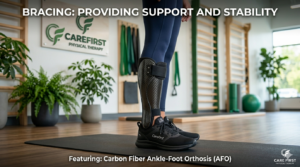
Bracing is one of the most common solutions for foot drop. A brace, often called an ankle-foot orthosis (AFO), is a device worn around the lower leg and foot to provide support and help lift the foot when walking. Braces are typically used in the following scenarios:
How Bracing Helps with Foot Drop:
- Improves walking ability: Braces help prevent the foot from dragging or slapping the ground, making it easier to walk.
- Enhances stability: The brace supports the foot and ankle, reducing the risk of tripping or falling.
- Reduces fatigue: By providing support, braces reduce the effort needed to lift the foot, which can help prevent exhaustion during walking.
Bracing can be particularly beneficial for individuals who have significant weakness or paralysis in their foot muscles. The use of a brace can also be combined with other treatments, such as physical therapy, to help manage foot drop effectively.
Types of Braces:
- Rigid AFOs: These provide maximum support and limit foot movement.
- Flexible AFOs: These allow some foot movement while still providing support and stability.
- Dynamic AFOs: These braces are designed to encourage natural movement while still supporting the foot.
Bracing is generally a non-invasive treatment option that can provide immediate relief and help improve walking ability.
You can also read : Adaptive Eating Solutions: Weighted Utensils & Tools for Tremors (USA Guide)
Strengthening: Restoring Muscle Function

In addition to bracing, strengthening exercises can play a key role in treating foot drop. Strengthening the muscles that lift the foot, such as the tibialis anterior, can help restore some of the lost function and improve overall mobility. Physical therapy is often recommended to help individuals with foot drop regain muscle strength, improve coordination, and enhance their walking ability.
How Strengthening Helps with Foot Drop:
- Restores muscle function: Strengthening exercises target the muscles responsible for lifting the foot, which can help improve overall foot mobility.
- Improves coordination: Exercises can help train the brain and muscles to work together more effectively when walking.
- Enhances flexibility: Stretching and strengthening the muscles and tendons can help prevent stiffness and improve movement.
Strengthening Exercises for Foot Drop:
Some common strengthening exercises for foot drop include:
- Toe raises: Standing with feet flat, slowly raise your toes while keeping your heels on the ground.
- Towel scrunches: Place a towel on the floor and use your toes to scrunch it toward you.
- Resistance band exercises: Use a resistance band to strengthen the muscles in your lower leg and foot.
Strengthening exercises can take time, and consistency is key to achieving improvements. If you’re unsure of which exercises are best for your condition, a physical therapist can help design a program that suits your needs.
Which Option is Right for You? Bracing vs. Strengthening

Deciding between bracing and strengthening exercises for foot drop depends on several factors, including the severity of your condition, the underlying cause of your foot drop, and your personal goals for mobility.
- Bracing may be the best option for individuals who need immediate support to improve their walking ability and prevent falls. It provides a quick solution for stability and can be used throughout the day while walking.
- Strengthening exercises are ideal for individuals who have some residual muscle function and are looking to regain strength and flexibility in the affected muscles. Strengthening can complement bracing, as well, allowing for long-term improvements in muscle function.
In many cases, a combination of both bracing and strengthening exercises is the most effective treatment for foot drop. A physical therapist can assess your specific needs and recommend a comprehensive treatment plan tailored to your condition.
Schedule Your Personalized Rehab Consultation
Conclusion: Finding the Right Treatment for Foot Drop
Managing foot drop effectively requires understanding your specific needs and exploring all treatment options available. While bracing offers immediate support and stability, strengthening exercises can help restore muscle function and improve mobility over time. By working with a healthcare professional and committing to a treatment plan, you can find the right approach for improving your walking ability and reducing the impact of foot drop on your life.
At Care First Physical Therapy, we offer expert physical therapy services to help you manage foot drop and regain your independence. Our team of skilled therapists will work with you to create a personalized plan that combines bracing, strengthening, and other therapies to get you back on your feet.
You can also read : Freezing of Gait: Tips to Get Moving When Your Feet Feel Stuck
Contact Care First Physical Therapy to schedule a consultation today and start your journey toward recovery.
FAQs About Foot Drop:
1. Can foot drop be cured?
While foot drop may not be completely reversible in all cases, treatments like bracing and strengthening exercises can significantly improve mobility and walking ability.
2. How long does it take to recover from foot drop?
Recovery time varies depending on the cause of foot drop and the treatment approach. It can take several months of physical therapy and consistent exercise to see significant improvements.
3. Is surgery needed for foot drop?
Surgery is typically considered a last resort if other treatments, such as bracing and physical therapy, are ineffective. Surgery may be needed if there is a severe nerve injury or other underlying condition.
4. Can foot drop cause permanent disability?
If left untreated, foot drop can lead to permanent gait issues and a higher risk of falls. However, with appropriate treatment, many individuals can regain function and improve their quality of life.
5. Should I wear a brace all the time for foot drop?
Bracing is often recommended during walking and other physical activities. However, your physical therapist will advise you on how long to wear the brace based on your condition and needs.