
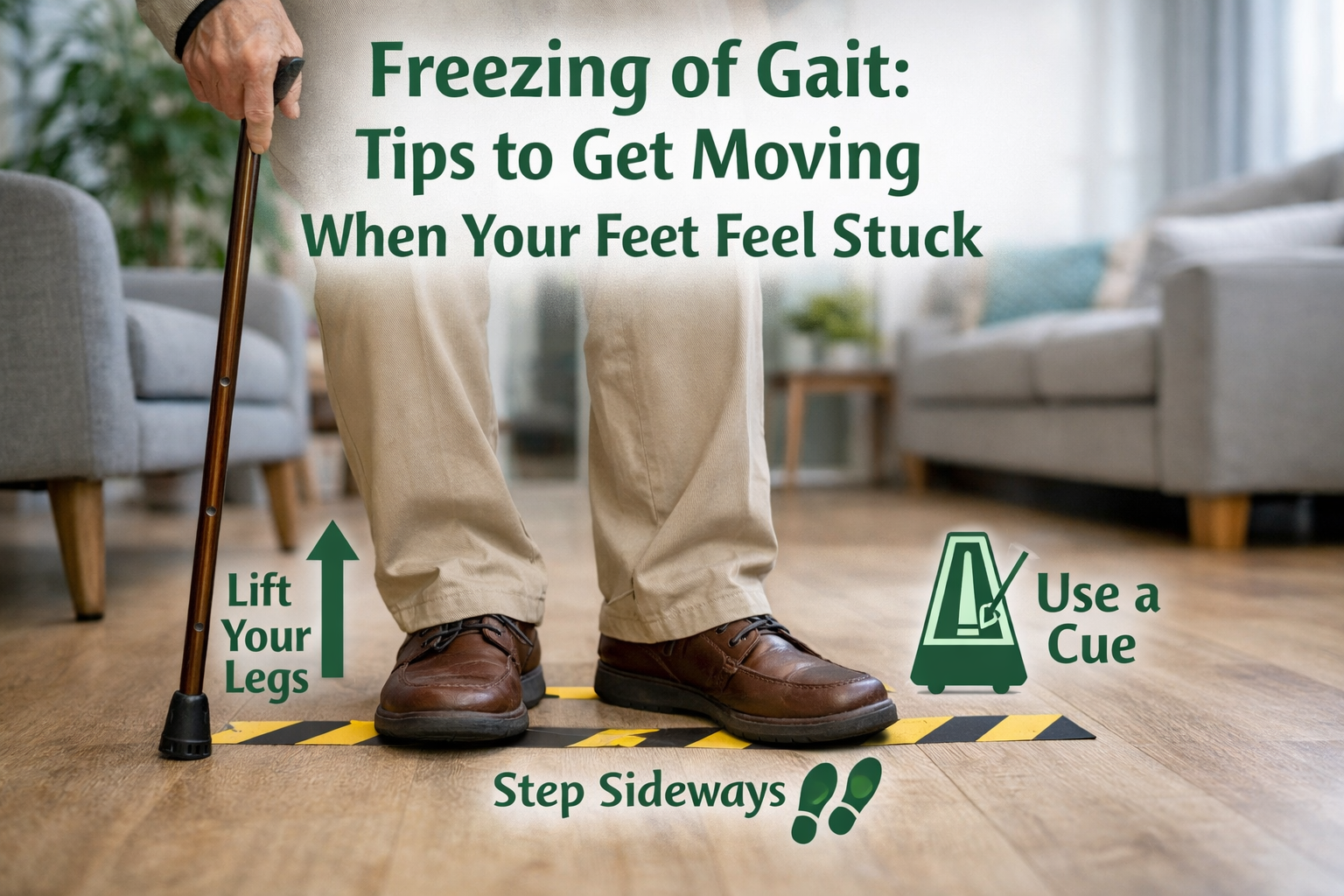
Have you ever felt like your feet are glued to the floor, even though your mind is telling you to walk? This frustrating and sometimes scary experience is known as freezing of gait. It commonly affects people with neurological conditions, especially Parkinson’s disease, and can increase the risk of falls and injuries.
In this blog, we’ll break down what freezing of gait is, why it happens, and most importantly, practical tips to help you get moving again.
You Can Read also : Voice Projection: Why Parkinson’s Makes Your Voice Quiet and How to “Loud” It
What is Freezing of Gait?
Freezing of gait is a temporary inability to move your feet forward despite the intention to walk. People often describe it as feeling like their feet are “stuck” or “glued” to the ground.
This condition usually lasts for a few seconds but can feel much longer and more distressing.
Common Causes of Freezing of Gait
Freezing of gait is often linked to neurological disorders, especially:
- Parkinson’s disease
- Multiple system atrophy
- Progressive supranuclear palsy
It can also be triggered by:
- Stress or anxiety
- Walking through narrow spaces
- Turning or changing direction
- Approaching doorways
Symptoms You Should Notice
Recognizing freezing of gait early can help manage it better. Look out for:
- Sudden inability to step forward
- Short, shuffling steps
- Feeling like your feet won’t lift
- Episodes during turning or starting to walk
Tips to Overcome Freezing of Gait
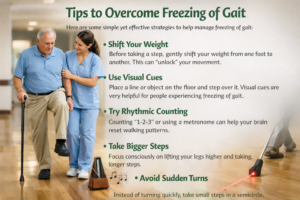
Here are some simple yet effective strategies to help manage freezing of gait:
1. Shift Your Weight
Before taking a step, gently shift your weight from one foot to another. This can “unlock” your movement.
2. Use Visual Cues
Place a line or object on the floor and step over it. Visual cues are very helpful for people experiencing freezing of gait.
3. Try Rhythmic Counting
Counting “1-2-3” or using a metronome can help your brain reset walking patterns.
4. Take Bigger Steps
Focus consciously on lifting your legs higher and taking longer steps.
5. Avoid Sudden Turns
Instead of turning quickly, take small steps in a semicircle.
6. Stay Calm
Stress can worsen freezing of gait, so pause, breathe, and restart slowly.
You Can Read also : The ‘Silent’ Fall Risk: How Inner Ear Issues Affect Balance & the Role of Physical Therapy
Exercises That Can Help
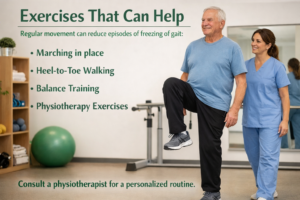
Regular movement can reduce episodes of freezing of gait:
- Marching in place
- Heel-to-toe walking
- Balance training
- Physiotherapy exercises
Consult a physiotherapist for a personalized routine.
When to See a Doctor
If freezing of gait is happening frequently or worsening, it’s important to consult a healthcare professional. Medication adjustments or therapy may help improve mobility.
You Can Read also : Concussion Recovery in Adults: Why You Can’t Just “Sleep It Off”
Conclusion
Freezing of gait can feel overwhelming, but it is manageable with the right techniques and awareness. Small changes like using cues, practicing exercises, and staying calm can make a big difference in daily movement.
With proper care, guidance, and consistency, you can regain confidence and reduce the impact of freezing of gait on your life.
FAQs
1. What triggers freezing of gait the most?
Common triggers include stress, tight spaces, turning, and starting to walk.
2. Is freezing of gait only related to Parkinson’s disease?
No, while common in Parkinson’s, freezing of gait can occur in other neurological conditions as well.
3. Can freezing of gait be cured?
There is no complete cure, but symptoms can be managed effectively with therapy and techniques.
4. Are there devices to help with freezing of gait?
Yes, laser canes, walkers, and metronomes can help improve walking patterns.
5. How can caregivers help someone with freezing of gait?
Caregivers can provide cues, stay calm, encourage movement, and ensure a safe environment.