
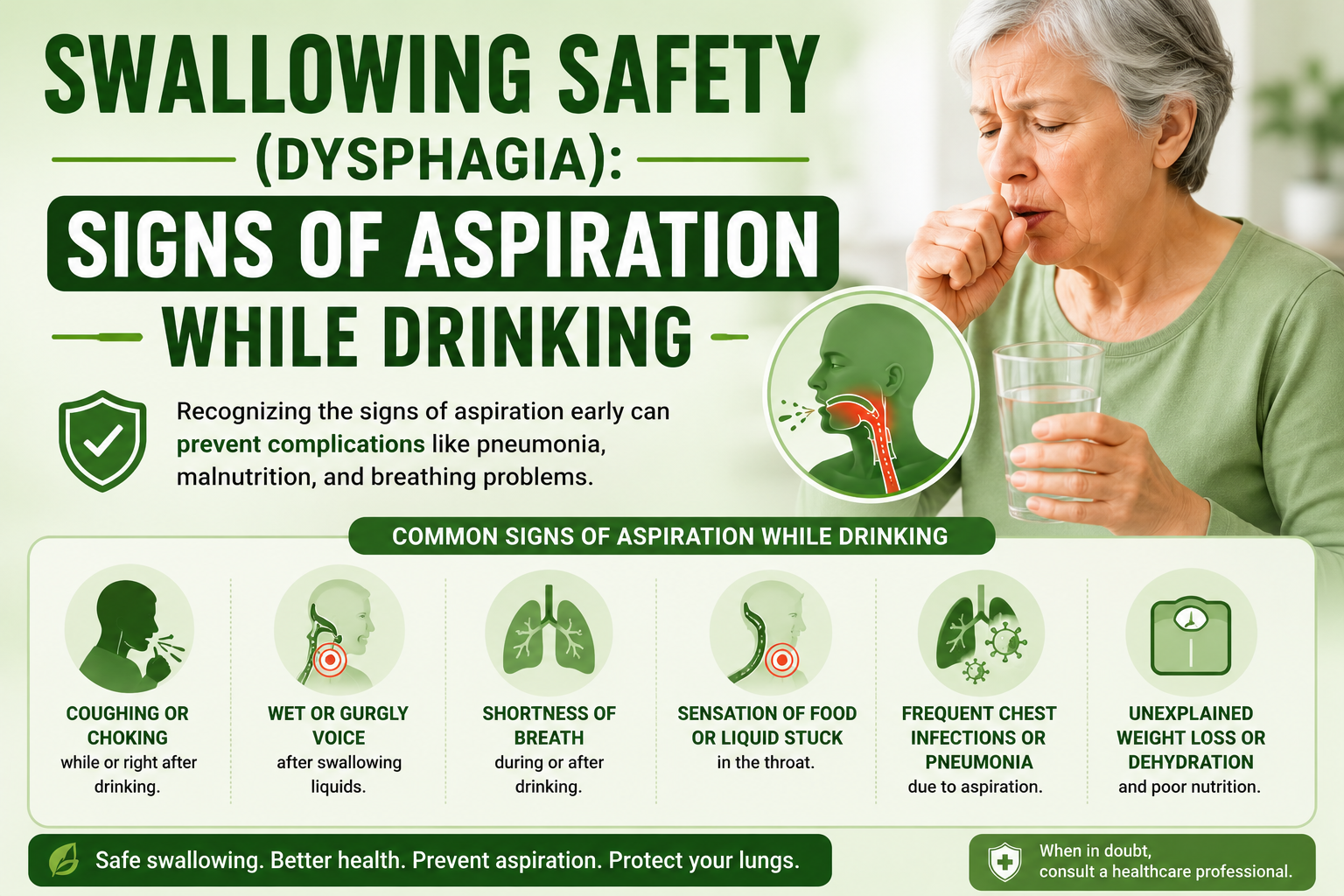
Swallowing is a natural process that most people rarely think about. However, for individuals suffering from dysphagia, even drinking water can become difficult and dangerous. One of the biggest complications linked to dysphagia is aspiration, a condition where food or liquids accidentally enter the airway instead of the stomach.
Understanding the signs of aspiration in dysphagia is extremely important because untreated aspiration can lead to serious health complications such as choking, respiratory infections, dehydration, malnutrition, and aspiration pneumonia.
In this guide, we’ll explain what dysphagia is, the common symptoms of aspiration, its causes, prevention methods, and effective treatment options to improve swallowing safety.
What is Dysphagia?
Dysphagia is the medical term for swallowing difficulties. It occurs when the muscles and nerves involved in swallowing do not work properly. Dysphagia can affect people of all ages, but it is more common in older adults and individuals with neurological conditions.
Common causes of dysphagia include:
- Stroke
- Parkinson’s disease
- Multiple sclerosis
- Dementia
- Head or neck injuries
- Esophageal disorders
- Muscle weakness due to aging
People with dysphagia may struggle to swallow liquids, foods, or even saliva safely.
What is Aspiration?
Aspiration happens when food, liquid, or saliva enters the airway or lungs instead of traveling down the esophagus into the stomach. Normally, the body’s swallowing reflex protects the airway during eating and drinking. But when swallowing muscles weaken, aspiration can occur.
Frequent aspiration can cause:
- Choking episodes
- Lung infections
- Aspiration pneumonia
- Breathing difficulties
- Reduced oxygen levels
Recognizing the signs of aspiration in dysphagia early can help prevent severe complications.
You Can Also Read : Foot Drop: Bracing vs. Strengthening (What’s Right for You?)
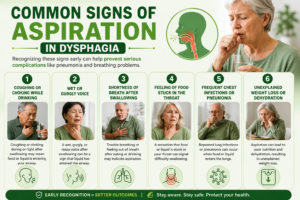
Common Signs of Aspiration in Dysphagia
1. Coughing or Choking While Drinking
One of the most noticeable signs of aspiration is coughing or choking immediately after swallowing liquids or food. This occurs because the body is trying to clear material from the airway.
If coughing happens frequently during meals, it may indicate swallowing dysfunction.
2. Wet or Gurgly Voice After Swallowing
A wet, gurgly, or raspy voice after drinking can be a warning sign that liquid has entered the airway.
This symptom often occurs because fluids remain around the vocal cords after swallowing improperly.
3. Shortness of Breath After Eating or Drinking
Difficulty breathing or sudden breathlessness after swallowing may indicate aspiration. Liquids entering the lungs can irritate the respiratory system and interfere with normal breathing.
Seek medical attention if breathing problems occur repeatedly after meals.
4. Feeling Food Stuck in the Throat
Many individuals with dysphagia experience the sensation that food or liquid is stuck in the throat or chest. This can increase the risk of aspiration because swallowed material may not move properly into the stomach.
5. Frequent Chest Infections or Pneumonia
Recurring respiratory infections are a serious sign of chronic aspiration. When food particles or bacteria enter the lungs repeatedly, aspiration pneumonia can develop.
Symptoms of aspiration pneumonia include:
- Fever
- Persistent cough
- Chest congestion
- Fatigue
- Difficulty breathing
6. Unexplained Weight Loss or Dehydration
People with dysphagia may avoid eating or drinking due to fear of choking. Over time, this can lead to dehydration, malnutrition, and unintended weight loss.
Causes of Aspiration in Dysphagia
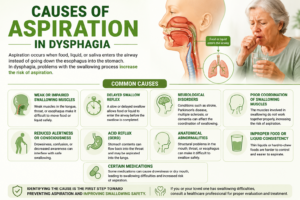
Several factors can contribute to aspiration in people with swallowing disorders, including:
- Weak throat muscles
- Delayed swallowing reflex
- Poor coordination of swallowing muscles
- Neurological disorders
- Reduced alertness or consciousness
- Acid reflux disease (GERD)
- Aging-related muscle weakness
Understanding the underlying cause helps healthcare providers create an effective treatment plan.
How Dysphagia is Diagnosed
If you notice signs of aspiration while drinking or eating, it is important to seek medical evaluation.
Healthcare professionals may perform:
Modified Barium Swallow Study (MBSS)
This imaging test helps doctors observe how food and liquids move through the mouth and throat during swallowing.
Fiberoptic Endoscopic Evaluation of Swallowing (FEES)
A small camera is inserted through the nose to examine swallowing function and detect aspiration.
Physical Swallowing Assessment
A speech-language pathologist evaluates swallowing strength, coordination, and safety.
You Can Also Read : The First 90 Days Post-Stroke: A Roadmap for Recovery
Treatment Options for Dysphagia and Aspiration
1. Swallowing Therapy
Speech-language pathologists provide specialized exercises to strengthen swallowing muscles and improve coordination.
Swallowing therapy may include:
- Tongue-strengthening exercises
- Breathing coordination techniques
- Swallowing posture adjustments
2. Diet Modification
Changing food and liquid textures can significantly reduce aspiration risk.
Healthcare providers may recommend:
- Thickened liquids
- Soft foods
- Pureed diets
These adjustments make swallowing easier and safer.
3. Proper Eating Position
Maintaining correct posture during meals can help prevent aspiration.
Tips include:
- Sit upright while eating
- Keep the chin slightly tucked
- Remain seated for at least 30 minutes after meals
4. Eating Slowly
Taking small bites and sips helps improve swallowing control and reduces choking risks.
Avoid rushing meals or talking while swallowing.
5. Medical Treatment
In severe cases, doctors may recommend medications, feeding tubes, or surgical procedures depending on the cause of dysphagia.
Prevention Tips for Safer Swallowing
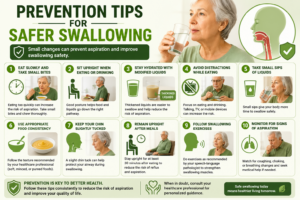
Preventing aspiration is essential for maintaining respiratory health and improving quality of life.
Here are some important swallowing safety tips:
- Eat slowly and chew thoroughly
- Avoid lying down while eating
- Reduce distractions during meals
- Drink liquids carefully in small sips
- Follow prescribed swallowing exercises
- Stay hydrated with approved liquid consistency
These habits can significantly lower aspiration risk.
When to See a Doctor
You should consult a healthcare professional if you experience:
- Frequent coughing while drinking
- Repeated choking episodes
- Ongoing swallowing difficulties
- Unexplained weight loss
- Recurring chest infections
- Wet or gurgly voice after meals
Early diagnosis and treatment can help prevent serious complications.
Conclusion
Recognizing the signs of aspiration in dysphagia is crucial for protecting your health and preventing life-threatening complications such as aspiration pneumonia. Symptoms like coughing after drinking, breathing difficulties, choking, and recurrent lung infections should never be ignored.
With proper swallowing therapy, diet modifications, and medical guidance, individuals with dysphagia can improve swallowing safety and maintain a better quality of life.
If you or a loved one experiences swallowing difficulties, seeking professional help early can make a major difference in recovery and long-term health.
You Can Also Read : Adaptive Eating Solutions: Weighted Utensils & Tools for Tremors (USA Guide)
Frequently Asked Questions (FAQs)
1. What are the most common signs of aspiration in dysphagia?
Common signs include coughing while drinking, choking, wet voice after swallowing, breathing difficulties, and recurrent respiratory infections.
2. Can aspiration cause pneumonia?
Yes. Frequent aspiration can introduce bacteria and food particles into the lungs, leading to aspiration pneumonia.
3. Is dysphagia treatable?
Yes. Dysphagia can often be managed through swallowing therapy, diet modifications, posture changes, and medical treatment.
4. Who is most at risk for aspiration?
Older adults and individuals with stroke, Parkinson’s disease, neurological disorders, or muscle weakness are at higher risk.
5. How can I make swallowing safer?
Sit upright during meals, take smaller bites, eat slowly, avoid distractions, and follow recommendations from a speech-language pathologist.