
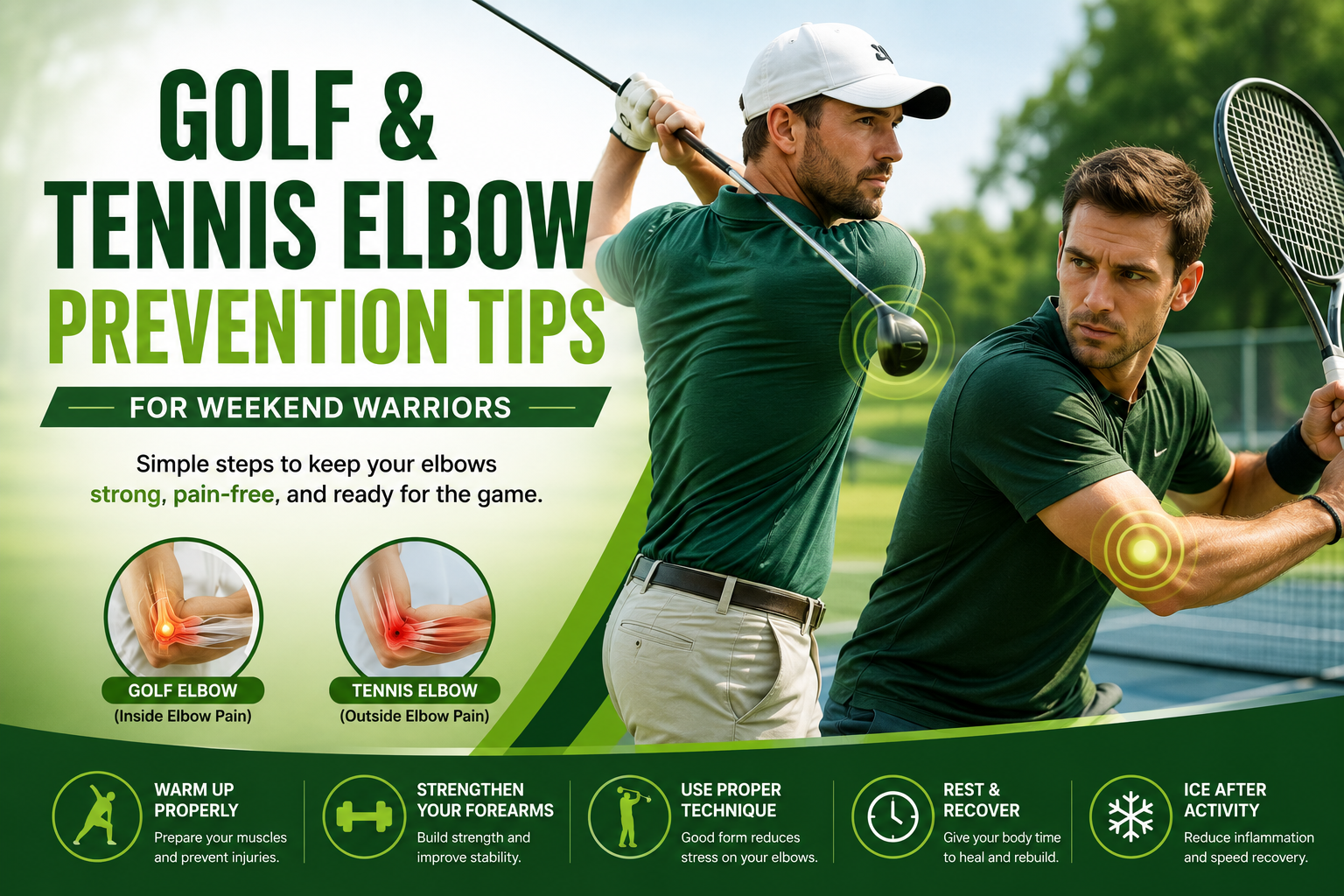
For many sports enthusiasts and weekend warriors, elbow pain can quickly turn a fun activity into a frustrating experience. Conditions like golf elbow and tennis elbow are among the most common overuse injuries caused by repetitive arm and wrist movements. Following the right golf & tennis elbow prevention tips can help you stay active, pain-free, and perform better in your favorite sports.
Whether you play golf, tennis, pickleball, badminton, cricket, or regularly hit the gym, understanding how to prevent elbow injuries is essential for long-term joint health.
In this guide, we’ll cover the causes, symptoms, and the most effective golf & tennis elbow prevention tips to protect your elbows and improve recovery.
What is Tennis Elbow?
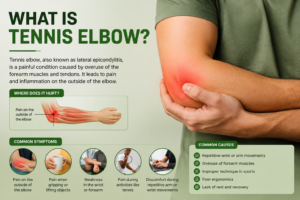
Tennis elbow, medically known as Lateral Epicondylitis, occurs when the tendons on the outer part of the elbow become inflamed due to repetitive stress. Despite its name, tennis elbow can affect anyone who frequently uses their forearm muscles.
Common Symptoms of Tennis Elbow
- Pain on the outside of the elbow
- Weak grip strength
- Pain while lifting objects
- Discomfort during wrist movements
- Forearm weakness and stiffness
Activities like tennis, typing, painting, weightlifting, and repetitive tool use often trigger this condition.
You Can Also Read : Gardening Without Pain: Ergonomic Tools and Posture Tips
What is Golf Elbow?
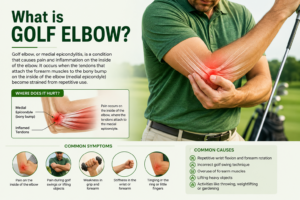
Golf elbow, also called Medial Epicondylitis, affects the tendons on the inside of the elbow. It develops due to repetitive wrist flexion and gripping movements.
Common Symptoms of Golf Elbow
- Pain on the inner side of the elbow
- Forearm tightness or stiffness
- Weakness while gripping objects
- Pain during golf swings or lifting
- Tingling sensation in fingers
Although common among golfers, this injury can also affect gym-goers, baseball players, and manual workers.
Main Causes of Golf and Tennis Elbow
Understanding the causes is an important part of following effective golf & tennis elbow prevention tips.
1. Repetitive Movements
Continuous arm and wrist movements strain the tendons over time.
2. Poor Sports Technique
Incorrect swing mechanics or improper posture can overload the elbow joint.
3. Weak Forearm Muscles
Weak muscles increase pressure on elbow tendons during activity.
4. Overtraining
Playing sports without adequate recovery leads to tendon inflammation.
5. Incorrect Equipment
Using the wrong racket size, grip, or golf club can increase stress on the elbow.
You Can Also Read : Swallowing Safety (Dysphagia): Signs of Aspiration While Drinking
Best Golf & Tennis Elbow Prevention Tips
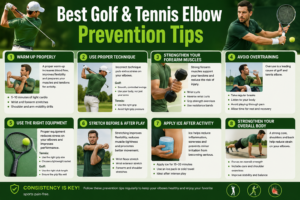
Preventing elbow injuries requires a combination of proper technique, strengthening exercises, and recovery strategies.
1. Warm Up Before Every Activity
One of the most important golf & tennis elbow prevention tips is performing a proper warm-up before sports or workouts.
Effective Warm-Up Exercises
- Wrist rotations
- Arm circles
- Forearm stretches
- Shoulder mobility drills
- Light cardio for 5–10 minutes
Warming up improves blood flow and prepares your muscles and tendons for activity.
2. Use Proper Sports Technique
Incorrect form is one of the leading causes of elbow injuries.
Tennis Technique Tips
- Avoid gripping the racket too tightly
- Use your legs and core for power
- Maintain proper wrist alignment
Golf Swing Tips
- Focus on smooth swings instead of force
- Avoid excessive wrist bending
- Use full-body rotation for power generation
Working with a coach can help correct technique and reduce injury risk.
3. Strengthen Your Forearm Muscles
Strengthening exercises are highly effective golf & tennis elbow prevention tips because they improve tendon support and endurance.
Best Forearm Exercises
Wrist Curls
Hold a light dumbbell and slowly curl your wrist upward.
Reverse Wrist Curls
Perform wrist curls with your palm facing downward.
Grip Strength Training
Use grip trainers or squeeze a stress ball regularly.
Resistance Band Exercises
Resistance bands help improve muscle stability and flexibility.
Perform these exercises 2–3 times per week for better elbow support.
4. Avoid Overtraining
Rest and recovery are essential for preventing tendon injuries.
Recovery Tips
- Take regular breaks during sports
- Avoid playing through pain
- Alternate activities to reduce repetitive strain
- Sleep properly for muscle recovery
Ignoring pain can worsen inflammation and lead to chronic elbow problems.
5. Use the Right Equipment
Choosing suitable equipment is one of the simplest golf & tennis elbow prevention tips.
Tennis Equipment Tips
- Use the correct racket grip size
- Choose lightweight rackets
- Replace worn-out strings regularly
Golf Equipment Tips
- Use clubs suited to your height and swing style
- Ensure grips are comfortable and not too small
Proper equipment reduces stress on the elbow and improves performance.
6. Stretch After Physical Activity
Post-workout stretching helps maintain flexibility and reduces muscle tightness.
Recommended Stretches
- Wrist flexor stretch
- Wrist extensor stretch
- Shoulder stretches
- Forearm mobility exercises
Hold each stretch for 20–30 seconds without bouncing.
7. Apply Ice After Intense Activity
Applying ice helps reduce inflammation and muscle soreness.
How to Ice Properly
- Use an ice pack for 15–20 minutes
- Wrap ice in a towel to avoid skin irritation
- Apply after sports or workouts if discomfort appears
This simple recovery step can prevent minor irritation from becoming a serious injury.
When to Seek Medical Help
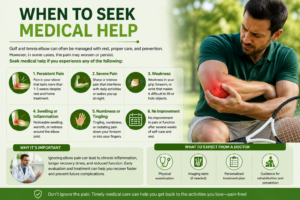
Even after following proper golf & tennis elbow prevention tips, some people may still experience pain.
Seek professional help if you notice:
- Persistent elbow pain
- Swelling or severe stiffness
- Weakness affecting daily tasks
- Pain lasting more than 1–2 weeks
A physiotherapist or orthopedic specialist can recommend targeted treatment and rehabilitation exercises.
Conclusion
Following the right golf & tennis elbow prevention tips can help you stay active, improve performance, and avoid long-term elbow injuries. Simple habits like warming up, using proper technique, strengthening forearm muscles, resting adequately, and using the correct equipment make a significant difference.
Whether you’re a golfer, tennis player, gym enthusiast, or casual athlete, protecting your elbows should be a priority. Preventive care today can save you from chronic pain and lengthy recovery in the future.
By consistently applying these golf & tennis elbow prevention tips, you can continue enjoying your favorite activities safely and comfortably.
You Can Also Read : Foot Drop: Bracing vs. Strengthening (What’s Right for You?)
Frequently Asked Questions (FAQs)
1. What is the difference between golf elbow and tennis elbow?
Tennis elbow causes pain on the outer side of the elbow, while golf elbow affects the inner side. Both conditions result from repetitive strain on tendons.
2. What are the best golf & tennis elbow prevention tips?
The best prevention tips include proper warm-ups, strengthening exercises, good sports technique, using correct equipment, and allowing enough recovery time.
3. Can gym workouts cause tennis elbow?
Yes, improper lifting techniques, overtraining, and repetitive gripping during workouts can contribute to tennis elbow.
4. How long does it take to recover from golf or tennis elbow?
Recovery can take a few weeks to several months depending on the severity and treatment approach.
5. Should I stop playing sports if I have elbow pain?
You should reduce activities causing pain and seek medical advice if symptoms persist. Continuing intense activity may worsen the condition.