
When you’re dealing with an orthopedic injury, joint pain, muscle weakness, or difficulty moving comfortably, physical therapy can play an important role in recovery. But one common question patients have is: Is manual therapy better than exercise therapy?
The answer is that neither approach is automatically better for every patient. Manual therapy and exercise therapy serve different purposes, and a physical therapist may use one or both depending on your condition, symptoms, mobility, strength, and recovery goals.
For many orthopedic conditions, exercise-based rehabilitation is an important part of restoring strength and function, while manual therapy may be used alongside therapeutic exercise to improve mobility and help manage symptoms.
According to the CDC, about 1 in 4 U.S. adults—approximately 53.2 million people—have doctor-diagnosed arthritis, making joint-related pain and mobility limitations a significant health concern in the United States. Musculoskeletal conditions, including back and neck pain, joint disorders, and injuries, are also among the most common reasons people seek physical therapy.
Understanding the difference between manual therapy and exercise therapy can help you make more informed decisions about your orthopedic rehabilitation.
What Is Manual Therapy?
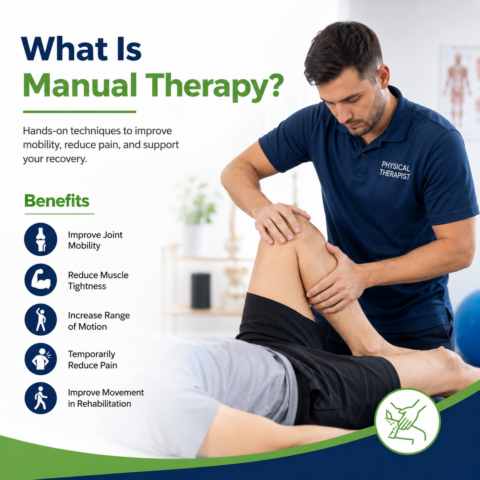
Manual therapy is a hands-on treatment approach performed by a trained physical therapist. It involves specific techniques designed to influence joints, muscles, connective tissues, and other structures involved in movement.
Depending on the patient’s condition, manual therapy may include:
- Joint mobilization
- Soft-tissue mobilization
- Massage techniques
- Stretching performed by the therapist
- Joint manipulation when clinically appropriate
- Techniques designed to improve range of motion
The goal of manual therapy isn’t simply to “massage” an injured area. A physical therapist selects techniques based on an individual’s evaluation, symptoms, movement limitations, and functional goals.
Potential Benefits of Manual Therapy
Manual therapy may help some patients:
- Improve joint mobility
- Reduce muscle tightness
- Increase range of motion
- Temporarily reduce pain
- Improve movement during rehabilitation
- Make certain exercises easier or more comfortable
However, manual therapy is generally best viewed as one component of a broader rehabilitation program, rather than a standalone solution.
Read More: 5 Signs That a Nagging Injury Needs a Physical Therapy Evaluation
What Is Exercise Therapy?
Exercise therapy, also called therapeutic exercise, involves specific movements and physical activities prescribed by a physical therapist to address an individual’s limitations and recovery goals.
Unlike passive treatments, exercise therapy requires the patient to actively participate in the rehabilitation process.
A physical therapist may prescribe exercises such as:
- Strengthening exercises
- Range-of-motion exercises
- Stretching
- Balance exercises
- Core stabilization
- Postural exercises
- Functional movement training
- Cardiovascular conditioning
- Sport-specific exercises
The exercises are usually progressed as the patient becomes stronger and more capable.
Benefits of Exercise Therapy
Exercise therapy can help patients:
- Build muscle strength
- Improve flexibility
- Restore joint function
- Improve balance and coordination
- Increase endurance
- Improve movement patterns
- Return to everyday activities
- Prepare for work or sports
- Develop long-term self-management skills
Because patients can continue many prescribed exercises at home, exercise therapy can also help them remain actively involved in their recovery between physical therapy appointments.

Manual Therapy vs. Exercise Therapy: What’s the Difference?
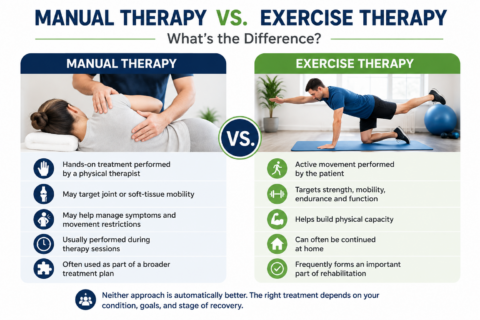
The biggest difference is that manual therapy is primarily therapist-directed and hands-on, while exercise therapy requires active participation from the patient.
| Manual Therapy | Exercise Therapy |
| Hands-on treatment performed by a physical therapist | Active movement performed by the patient |
| May target joint or soft-tissue mobility | Targets strength, mobility, endurance and function |
| May help manage symptoms and movement restrictions | Helps build physical capacity |
| Usually performed during therapy sessions | Can often be continued at home |
| Often used as part of a broader treatment plan | Frequently forms an important part of rehabilitation |
Neither approach should automatically be considered superior. The appropriate treatment depends on the patient’s diagnosis, physical examination, stage of recovery, and goals.
Is Manual Therapy Better Than Exercise Therapy?
For most orthopedic rehabilitation, the question isn’t necessarily “manual therapy or exercise therapy?” but rather “how can the right combination of treatments help this patient reach their goals?”
Manual therapy can sometimes help address pain, stiffness, or restricted movement. Once movement improves, therapeutic exercises can help patients develop the strength, control, and endurance needed for daily activities.
For example, someone recovering from a shoulder injury may have limited shoulder mobility. A physical therapist may use appropriate manual techniques to address mobility restrictions and then guide the patient through strengthening and movement exercises.
The exercise component is particularly important because patients need to develop the physical capacity required to return to their normal activities.
What Does Research Say About Manual Therapy and Exercise?
Research on musculoskeletal rehabilitation suggests that exercise is an important component of treatment for many orthopedic conditions, while manual therapy may provide additional benefits for selected patients.
Clinical practice guidelines frequently recommend active rehabilitation, education, and exercise for conditions such as low back pain, osteoarthritis, and other musculoskeletal disorders.
For example, the American Physical Therapy Association’s clinical practice guidance for several musculoskeletal conditions supports active rehabilitation approaches and individualized exercise programs. Manual therapy may also be recommended in certain situations, particularly when combined with other interventions.
The evidence doesn’t support a one-size-fits-all approach. Instead, treatment should be based on the patient’s presentation and goals.
Read More: Finding the Right Physical Therapist in Cary, NC: What Patients Should Know
The Role of Exercise in Long-Term Orthopedic Recovery
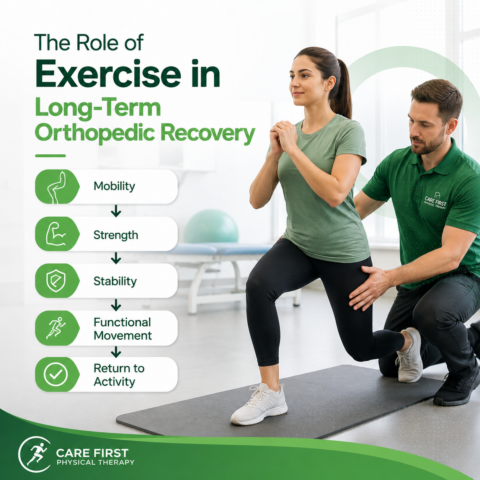
One major advantage of therapeutic exercise is that it can help patients develop the physical capacity they need outside the clinic.
For example, if a patient has knee pain and weakness, a physical therapist may prescribe progressive strengthening exercises targeting the muscles around the hip and knee.
As strength improves, exercises can become more challenging and eventually resemble the movements required for everyday activities.
This progression may include:
Mobility → Strength → Stability → Functional Movement → Return to Activity
The exact progression depends on the patient’s condition and recovery goals.
When Might Manual Therapy Be Helpful?
Manual therapy may be considered when a patient has specific mobility or soft-tissue limitations.
It may be incorporated into rehabilitation for certain cases involving:
- Joint stiffness
- Reduced range of motion
- Muscle tightness
- Certain types of neck or back pain
- Post-injury mobility limitations
- Some orthopedic post-surgical rehabilitation programs
A physical therapist will first assess whether manual therapy is appropriate. Not every patient or condition requires hands-on treatment.
When Is Exercise Therapy Especially Important?
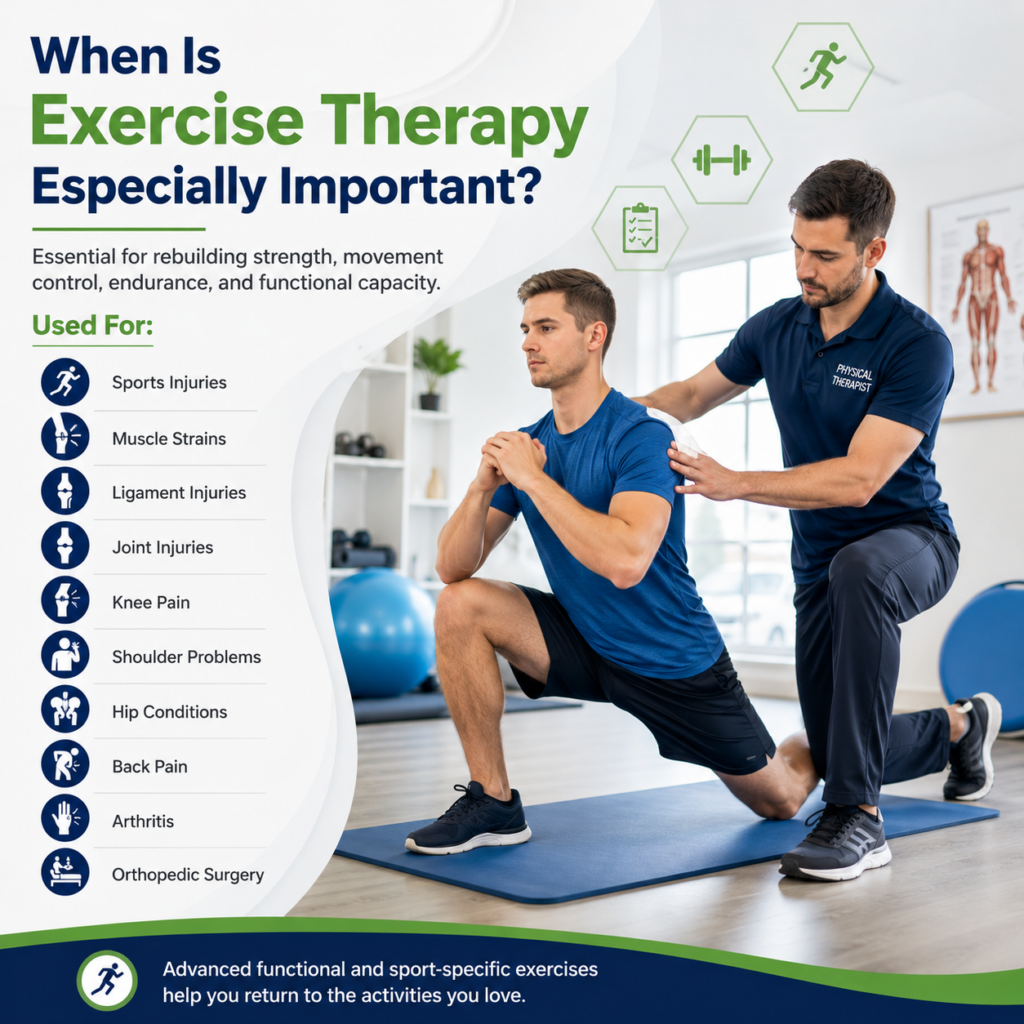
Exercise therapy can be particularly important when rehabilitation involves rebuilding strength, movement control, endurance, or functional capacity.
It may be used for patients recovering from:
- Sports injuries
- Muscle strains
- Ligament injuries
- Joint injuries
- Knee pain
- Shoulder problems
- Hip conditions
- Back pain
- Arthritis
- Orthopedic surgery
For patients returning to sports or physically demanding work, rehabilitation may eventually include more advanced functional and sport-specific exercises.
Can Manual Therapy and Exercise Therapy Be Used Together?
Yes. In many rehabilitation programs, manual therapy and exercise therapy can complement each other.
Consider a patient with limited shoulder mobility. A physical therapist might use appropriate hands-on techniques during a session and then prescribe active range-of-motion and strengthening exercises.
The objective isn’t simply to make the patient feel better temporarily. The broader goal is to help the patient regain the mobility, strength, and functional ability needed for daily life.
This is why an individualized treatment plan can be more useful than relying on a single technique.
Which Treatment Is Right After Orthopedic Surgery?
Recovery after orthopedic surgery varies significantly depending on the procedure and the individual.
Physical therapy may be recommended after procedures such as:
- Joint replacement
- ACL reconstruction
- Rotator cuff surgery
- Meniscus surgery
- Fracture repair
- Other orthopedic procedures
Post-surgical rehabilitation commonly involves a gradual progression of mobility, strengthening, balance, and functional activities.
Manual techniques may sometimes be included when appropriate, but the rehabilitation plan should always follow the surgeon’s precautions and the physical therapist’s clinical assessment.
Read More: Shoulder Pain 101: Rotator Cuff Injuries and Overuse Explained
How a Physical Therapist Chooses the Right Treatment
Before developing a treatment plan, an orthopedic physical therapist may evaluate:
- Your medical history
- The nature of your injury
- Pain levels
- Joint mobility
- Muscle strength
- Flexibility
- Balance
- Walking or movement patterns
- Functional limitations
- Previous injuries or surgeries
- Work, recreational, or athletic requirements
- Your personal recovery goals
This evaluation helps the therapist determine which interventions may be appropriate.
A patient with severe stiffness may have different treatment priorities than someone who has normal mobility but significant muscle weakness.
Orthopedic Conditions That May Benefit From Physical Therapy
Orthopedic physical therapy can be used as part of rehabilitation for many musculoskeletal conditions, including:
Knee Pain
Physical therapy may focus on strengthening, mobility, balance, and movement mechanics to help patients improve function.
Shoulder Injuries
Rehabilitation may address shoulder mobility, rotator cuff strength, stability, and functional movement.
Back Pain
Treatment may include therapeutic exercise, movement education, strengthening, mobility work, and other interventions based on the individual’s symptoms.
Hip Pain
A physical therapist may work on hip mobility, strength, balance, and functional movement.
Arthritis
Exercise and physical activity are commonly used to help people with arthritis maintain mobility, strength, and function.
Sports Injuries
Athletes may require progressive strengthening, balance training, movement retraining, and sport-specific rehabilitation before returning to competition.
How Long Does Orthopedic Physical Therapy Take?
There isn’t a universal timeline for orthopedic rehabilitation.
Recovery can depend on:
- The type and severity of the injury
- Whether surgery was performed
- Age and general physical condition
- Strength and mobility before treatment
- Consistency with the treatment plan
- Home exercise participation
- Work and activity demands
- Individual healing and recovery
Some minor injuries may improve within a relatively short period, while recovery from major injuries or orthopedic surgery can take considerably longer.
Your physical therapist can provide a more individualized estimate after evaluating your condition.
How to Get the Most From Physical Therapy
Your participation can make an important difference in your rehabilitation experience.
Follow Your Home Exercise Program
If your physical therapist provides exercises to perform at home, follow the recommended frequency and technique.
Communicate With Your Therapist
Tell your therapist if an exercise causes unusual or worsening pain, or if something feels different from what you expected.
Be Consistent
Progressive rehabilitation generally requires consistency rather than relying on occasional sessions.
Ask Questions
Understanding why you’re performing an exercise or receiving a particular treatment can help you stay engaged with your rehabilitation plan.
Follow Activity Recommendations
Returning to demanding activities too quickly can interfere with recovery. Follow the activity and progression recommendations provided by your healthcare team.
Frequently Asked Questions
Is manual therapy better than exercise therapy?
Not necessarily. Manual therapy and exercise therapy serve different purposes. For many orthopedic conditions, exercise is an important part of rehabilitation, while manual therapy may be used as an additional treatment when appropriate.
Can manual therapy replace exercise?
Usually, manual therapy should not be considered a replacement for active rehabilitation. Depending on the condition, therapeutic exercise may be important for rebuilding strength, mobility, balance, and functional capacity.
How often should I do physical therapy exercises?
The recommended frequency depends on your condition and treatment plan. Your physical therapist can provide specific instructions regarding how often and how intensely you should perform your exercises.
Can physical therapy help me avoid surgery?
Physical therapy may help some patients manage pain and improve function without surgery, depending on the condition. However, it cannot replace surgery when surgery is medically necessary. Your physician and physical therapist can help determine the appropriate treatment approach.
Is manual therapy safe?
Manual therapy is generally considered safe when performed by a qualified healthcare professional who has evaluated whether the technique is appropriate for the patient. Certain conditions may require avoiding particular techniques.
Can I do orthopedic physical therapy exercises at home?
Yes. Many patients receive home exercises as part of their rehabilitation program. However, exercises should be selected based on your individual condition rather than copied from a generic online program.
Takeaway: Manual Therapy or Exercise Therapy?
So, which is better for orthopedic recovery—manual therapy or exercise therapy?
There isn’t one answer for everyone.
Manual therapy can be useful for addressing certain mobility restrictions and symptoms, while exercise therapy plays a key role in developing strength, movement, endurance, and functional capacity. For many patients, a combination of appropriate hands-on treatment and progressive exercise may be part of an effective rehabilitation plan.
The most important step is receiving an individualized assessment from a qualified physical therapist who can identify the underlying limitations and develop a treatment plan around your specific needs.
Get Personalized Orthopedic Physical Therapy at Care First Rehab
If you’re experiencing persistent pain, reduced mobility, weakness, or difficulty returning to your normal activities, Care First Rehab can help you understand your rehabilitation options.
Our physical therapy approach focuses on individualized care designed around your condition, functional needs, and recovery goals.
Don’t let pain or limited mobility keep you from the activities you enjoy. Contact Care First Rehab to learn more about personalized physical therapy and rehabilitation services.
This article is intended for general educational purposes and does not replace an evaluation or medical advice from a qualified healthcare professional.