
A cerebral palsy (CP) diagnosis, or even the possibility of one, brings many questions. What will my child’s life look like? Will they walk? What can we do now?
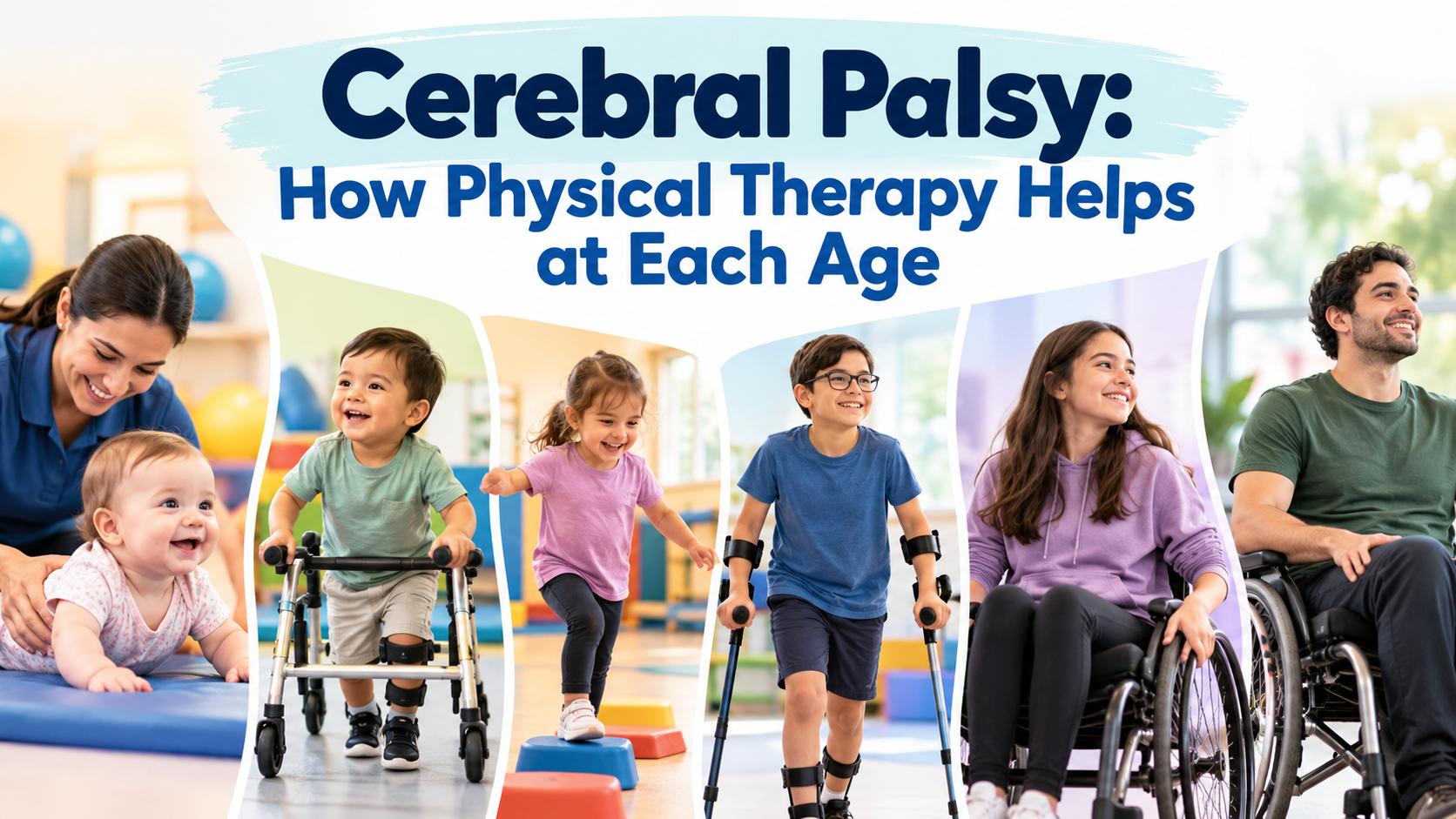
CP is a lifelong condition, but it is not a progressive brain condition, and with the right support, many people with CP build skills, independence, and fulfilling lives. Physical therapy is one of the most important parts of that support, and what it focuses on changes as a person grows.
This guide walks through how physical therapy helps at each stage, from the first months of life into adulthood.
What Is Cerebral Palsy?
Cerebral palsy is a group of conditions that affect movement, posture, and muscle control. It’s caused by differences in how the developing brain grew or by an injury to the brain before, during, or shortly after birth. The brain difference itself doesn’t get worse over time, but how it affects the body can change as a child grows.
CP is the most common motor disability in childhood. It looks different in every person, and it can affect:
- Muscle tone: stiffness (spasticity), floppiness (hypotonia), or a mix of both
- Movement and coordination: including involuntary movements in some types
- Balance and posture
- Walking and mobility
- Which parts of the body are affected, such as one side, both legs, or all four limbs
Some children also have related needs, such as challenges with speech, feeding, vision, hearing, learning, or epilepsy, though many do not. CP exists on a wide spectrum, from very mild to significant.
Read More: Toe Walking in Children: When It’s Normal and When to Worry
Understanding the GMFCS Levels
You may hear your care team mention the GMFCS (Gross Motor Function Classification System). It groups children into five levels based on how they move in daily life:
- Level I: walks without limitations, with some difficulty in more advanced skills like running and jumping
- Level II: walks in most settings, but may need help on stairs or uneven ground, and may use a handrail or aid for longer distances
- Level III: walks with a hand-held mobility device, and may use a wheelchair for longer distances
- Level IV: limited self-mobility, and often uses powered mobility or assisted movement
- Level V: needs to be transported in a manual wheelchair or similar support, and has very limited ability to move independently
GMFCS helps therapists set realistic, individualized goals and understand typical motor development. It isn’t a measure of a child’s worth or potential. Many children with CP surprise their families with what they achieve.
What Are the Early Signs of Cerebral Palsy?
CP is often noticed in the first two years, though a diagnosis can sometimes come later. Early signs may include:
- Stiff or very floppy muscle tone
- Delayed milestones, such as rolling, sitting, or crawling
- Using one side of the body more than the other, or “fisting” one hand beyond the early months
- Persistent primitive reflexes that haven’t faded when expected
- Trouble with feeding or swallowing
- Arching of the back, or stiff, scissored legs
- Unusual posture or difficulty holding the head steady
Many babies have some of these signs without having CP, so the key is evaluation rather than worry. If you have concerns, ask your pediatrician about a developmental assessment. Early intervention doesn’t need to wait for a formal diagnosis.

Why Physical Therapy Matters
CP can’t be cured, but the right therapy can help a person move more efficiently, build strength, prevent secondary problems, and take part in life. Physical therapy for CP generally aims to:
- Build strength, balance, and endurance
- Improve posture and movement control
- Support motor milestones and mobility
- Maintain flexibility and help prevent tightening and contractures
- Protect joints and hips as the body grows
- Teach safe, efficient ways to move
- Introduce equipment that supports independence
- Support participation at home, school, play, and community life
- Coach families so progress carries over into daily routines
Because bodies grow and needs change, therapy is rarely a one-time fix. It adapts as the person does.
How Physical Therapy Helps at Each Age
Infants (Birth to 12 Months)
Focus: early detection, early movement, and family support
In the first year, a baby’s brain is highly adaptable, which makes early support valuable. Therapy during this stage is gentle and play-based, and a major goal is helping parents feel confident.
A physical therapist may:
- Assess movement, tone, and reflexes and help identify when further medical evaluation is needed
- Encourage head control and tummy time in positions that feel comfortable
- Support rolling, reaching, and early sitting
- Teach positioning and handling techniques for carrying, feeding, dressing, and sleeping (safely)
- Prevent tightness with gentle range-of-motion work
- Guide play so babies practice movement on both sides of the body
- Coordinate with the pediatrician, neurologist, and other specialists
For babies who are at high risk, such as some premature infants, therapy and developmental follow-up often begin very early.
Read More: Flat Head Syndrome (Plagiocephaly) in Babies: Prevention and Physical Therapy
Toddlers (1 to 3 Years)
Focus: milestones, mobility, and building a foundation
Toddlers are on the move, or trying to be. This is a crucial time for working on sitting, crawling, pulling to stand, cruising, and walking.
A physical therapist may:
- Work on core strength and balance for sitting and standing
- Practice transitions, such as floor to sitting to standing
- Encourage crawling, kneeling, and early walking as appropriate
- Introduce supportive equipment, such as standers, walkers, and supportive seating
- Assess for bracing and orthotics, often ankle-foot orthoses (AFOs), to support alignment and walking
- Monitor hip health, since hips can be affected in CP and medical hip surveillance is recommended
- Help families set up home spaces that encourage safe movement
- Link families with early intervention services
In North Carolina, children from birth to age 3 may qualify for early intervention services. Ask your pediatrician or our team about referrals.
Preschoolers (3 to 5 Years)
Focus: functional skills and active play
Preschoolers are building independence, getting ready for school, and wanting to keep up with other kids. Therapy centers on skills that matter in everyday play.
A physical therapist may:
- Work on walking, running, jumping, climbing, and stairs where possible
- Train balance and coordination through games and obstacle courses
- Use task-specific, goal-directed practice, repeating real activities such as getting on and off a chair or climbing playground steps
- Strengthen key muscle groups in age-appropriate ways
- Fit and adjust orthotics, mobility devices, and adaptive equipment
- Support school readiness, including positioning, transitions, and mobility around a classroom
- Plan for school therapy, which may include an IEP (Individualized Education Program) and school-based services
School-Age Children (6 to 12 Years)
Focus: participation, endurance, and growth monitoring
As children grow, their bodies change quickly, and muscles can struggle to keep up with bone growth. Therapy at this stage emphasizes keeping children active, strong, and included.
A physical therapist may:
- Build strength and endurance for school, recess, and activities
- Maintain flexibility and monitor for tightening during growth spurts
- Refine walking and mobility, including community and school mobility
- Support participation in adapted sports, swimming, dance, and recreation
- Review equipment and orthotics as the child grows
- Provide guidance for pain, fatigue, and posture
- Coordinate with orthopedic, neurology, and rehabilitation teams around medical interventions such as spasticity management or orthopedic procedures, and provide therapy before and after those procedures
- Support the family and school team with strategies and goals
Teenagers (13 to 18 Years)
Focus: independence, fitness, and planning ahead
Adolescence brings growth spurts, body changes, and a strong drive for independence. For teens with CP, it can also bring new challenges such as pain, fatigue, or changes in mobility.
A physical therapist may:
- Support fitness and healthy habits, since regular activity is important for long-term health
- Address pain, stiffness, and fatigue as bodies change
- Update bracing, mobility devices, and equipment
- Teach self-management, helping teens understand their bodies and advocate for their needs
- Support safe participation in sports, gym class, and community activities
- Plan for the transition to adult healthcare, including identifying adult providers
- Work on life skills mobility goals, such as getting around a campus, using public transportation, and preparing for driving where possible
Adults With Cerebral Palsy
Focus: maintaining function, managing pain, and aging well
Cerebral palsy doesn’t end at 18, but many adults find that therapy options become harder to find. Physical therapy remains important, because adults with CP often face additional physical stress over the years. Many experience more fatigue, joint and muscle pain, stiffness, balance difficulties, or changes in walking ability earlier than others, even though the underlying CP hasn’t worsened.
A physical therapist may:
- Evaluate current strength, mobility, and balance
- Address pain and stiffness with exercise, manual therapy, and positioning
- Improve endurance and energy conservation strategies
- Reduce fall risk, and work on balance and safe walking
- Review mobility aids, orthotics, and home setups
- Support fitness and wellness routines that fit the person’s abilities
- Help with changes in function over time, so the person can stay independent as long as possible
- Coordinate with the doctor and other specialists
For adults, evidence on best approaches is still growing, and care should be individualized.
Read More: W-Sitting in Children: Is It Bad for Kids?
Therapy Approaches Your PT May Use
Physical therapists draw on a range of strategies, chosen to fit the person’s age, goals, and level of function. Common ones include:
- Task-specific and goal-directed training: practicing real-life skills repeatedly, such as standing up, walking, or climbing stairs
- Strength training: gradual, supervised strengthening, which research supports for many people with CP and which does not increase stiffness when done appropriately
- Balance and gait training: including treadmill training and practice on varied surfaces
- Stretching and range-of-motion work: to help maintain flexibility
- Motor learning approaches: helping the brain and body learn movement through repetition, feedback, and problem solving
- Aerobic and fitness activity: to build endurance and overall health
- Orthotics and equipment: custom braces, walkers, standers, and wheelchairs where needed
- Aquatic therapy: water can offer support and make movement easier for some people
- Family and caregiver coaching: so practice continues at home
Some interventions, such as certain technologies, therapy intensives, and alternative approaches, have varying levels of evidence. Ask your therapist and medical team to explain the research behind any recommendation.
Working With the Rest of the Care Team
CP care is a team effort. Along with physical therapy, many families work with:
- Pediatricians and primary care providers
- Neurologists and physiatrists (rehabilitation doctors)
- Orthopedic specialists, who monitor hips, spine, and joints
- Occupational therapists, who help with hand skills, self-care, play, and sensory needs
- Speech-language pathologists, who help with communication, feeding, and swallowing
- Orthotists and equipment specialists
- Teachers and school therapists
- Mental health and social support providers
Medical options such as medications for spasticity, injections, or surgery may be recommended in some cases. Physical therapy often works alongside these to help make the most of them.
Simple Ways to Support Your Child at Home
Always follow your child’s therapist’s and doctor’s guidance, because every child with CP is different.
- Build movement into daily routines, such as standing during teeth-brushing, reaching during dressing, or walking to the mailbox
- Practice little and often. Short, frequent sessions tend to work better than occasional long ones.
- Make it fun and meaningful. Use games, music, and your child’s favorite activities.
- Encourage independence, and let your child try before stepping in
- Use equipment as recommended, such as braces and standers, and check fit regularly as your child grows
- Celebrate progress, big and small
- Take care of yourself too. Caregiver fatigue is real, and support matters.
When to Seek an Evaluation
Consider contacting your pediatrician or a pediatric physical therapist if your child:
- Has delayed milestones or seems stiff or very floppy
- Uses one side of the body more than the other
- Has been diagnosed with CP and isn’t currently receiving therapy
- Shows new or increasing stiffness, pain, or loss of skills
- Is growing quickly and movement seems harder
- Needs new equipment or braces
- Is an adult with CP noticing increased pain, fatigue, or decline in mobility
How Care First Rehab Can Help
At Care First Rehab in Cary, NC, our therapy team works with children and adults to build strength, movement, and independence. Our approach includes:
- A thorough evaluation of movement, strength, balance, tone, and goals
- Individualized, goal-focused treatment plans that fit your family’s priorities
- Play-based therapy for children and functional, goal-based care for teens and adults
- Family coaching and home programs that fit your routine
- Coordination with your child’s doctors, school team, and other specialists
- Physical, occupational, and speech therapy under one roof, so support can be coordinated across needs
- In-home therapy and telemedicine options for families who need flexibility
- Two convenient locations in Cary
We’ll listen to your goals and work as part of your team, whatever stage you’re at.
Read More: BPPV Vertigo: The Epley Maneuver and When to See a Physical Therapist
Frequently Asked Questions
Can physical therapy cure cerebral palsy?
No. CP is a lifelong condition and therapy can’t cure it. But therapy can help a person build strength, improve movement, prevent complications, and take part more fully in daily life.
When should my child start physical therapy?
As early as concerns appear. Therapy doesn’t need to wait for a formal diagnosis, and early support can be valuable.
Will my child walk?
It depends on the type and severity of CP, and each child is different. Your child’s therapist and doctors can talk about realistic expectations and goals. Many children walk, some use walkers or other aids, and others use wheelchairs. Mobility in any form is a success.
How often will my child need therapy?
It varies with age, goals, and needs. Some children benefit from regular weekly sessions, some from short intensive blocks, and others from periodic check-ins. Your therapist will recommend a plan.
Does cerebral palsy get worse over time?
The brain injury doesn’t progress, but the effects on the body can change with growth and aging, such as increased stiffness, pain, or fatigue. This is why ongoing monitoring and care are important.
Do adults with CP benefit from physical therapy?
Yes. Therapy can help with pain, mobility, balance, fatigue, and maintaining independence over time.
Is strength training safe for people with CP?
Research suggests that appropriately supervised strength training is safe and beneficial for many people with CP. A therapist should design it to fit the individual.
What’s the difference between PT, OT, and speech therapy for CP?
Physical therapy focuses on movement, strength, balance, and mobility. Occupational therapy focuses on daily activities, hand skills, and self-care. Speech therapy focuses on communication, feeding, and swallowing. Many people with CP benefit from more than one.
Every Stage Deserves Support
Cerebral palsy looks different for every person, and the right support changes as life changes. Whether you’re a parent with a newborn, a family navigating school years, or an adult looking for help with pain and mobility, physical therapy can be a steady partner at every stage.
Call Care First Rehab at 919-460-1921 or [book an evaluation online] to talk with our therapy team.