
Getting back to normal after a long period of inactivity can be harder than many people expect. A few weeks or months of reduced movement can leave you feeling weaker, less flexible, easily tired, or less confident about everyday activities.
Inactivity can happen for many reasons. An injury, surgery, illness, hospitalization, chronic pain, a demanding work schedule, or simply spending too much time sitting can reduce how much you move each day. Over time, the body adapts to doing less.
The good news is that strength and physical function can be rebuilt. Physical therapy provides a structured and individualized way to safely return to movement, improve strength, restore mobility, and regain confidence in everyday activities.
At Care First Rehab, physical therapy focuses on helping patients improve areas such as strength, balance, coordination, flexibility, and endurance while working toward better overall function.
What Happens to Your Body During a Long Period of Inactivity?
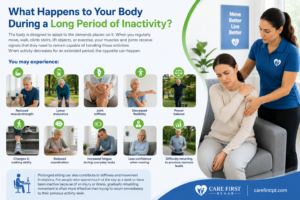
The body is designed to adapt to the demands placed on it. When you regularly move, walk, climb stairs, lift objects, or exercise, your muscles and joints receive signals that they need to remain capable of handling those activities.
When activity decreases for an extended period, the opposite can happen.
You may experience:
- Reduced muscle strength
- Lower endurance
- Joint stiffness
- Decreased flexibility
- Poorer balance
- Changes in walking ability
- Reduced coordination
- Increased fatigue during everyday tasks
- Less confidence when moving
- Difficulty returning to previous exercise levels
Muscle weakness can become noticeable during simple activities. Standing from a chair, walking around the house, carrying groceries, or climbing stairs may require significantly more effort than before.
Prolonged sitting can also contribute to stiffness and movement limitations. For people who spend much of the day at a desk or have been inactive because of an injury or illness, gradually rebuilding movement is often more effective than trying to return immediately to their previous activity level.
Read More: Neurological Occupational Therapy in NC
Why You Shouldn’t Rush Back Into Exercise
One of the biggest mistakes people make after inactivity is trying to do too much too soon.
If your body has become accustomed to low levels of activity, suddenly returning to your previous workout intensity may place excessive stress on muscles, joints, tendons, and other tissues.
This can lead to:
- Muscle soreness
- Joint irritation
- Strains
- Increased pain
- Excessive fatigue
- Setbacks in recovery
A better approach is to start at your current ability level and gradually increase the demands placed on your body.
Physical therapists can help determine an appropriate starting point and adjust the program as your strength and tolerance improve.

How Physical Therapy Helps Restore Strength
Physical therapy is not simply about performing a list of exercises. A good rehabilitation program considers how your body currently moves, what limitations are affecting you, and what activities you want to return to.
Here are several ways physical therapy can support recovery after inactivity.
1. A Personalized Physical Assessment
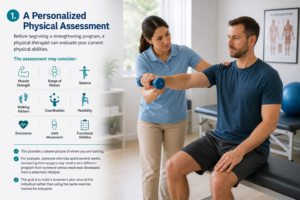
Before beginning a strengthening program, a physical therapist can evaluate your current physical abilities.
The assessment may consider:
- Muscle strength
- Range of motion
- Balance
- Walking pattern
- Coordination
- Flexibility
- Endurance
- Joint movement
- Functional abilities
This provides a clearer picture of where you are starting.
For example, someone who has spent several weeks recovering from surgery may need a very different program from someone whose weakness developed from a sedentary lifestyle.
The goal is to build a treatment plan around the individual rather than using the same exercise routine for everyone.
2. Gradual Strength Training
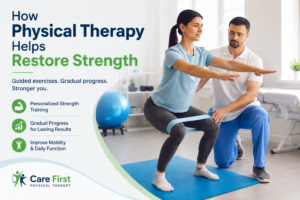
Once your therapist understands your current abilities, strengthening exercises can be introduced at an appropriate level.
Depending on your needs, therapy may include exercises that target:
- Legs
- Hips
- Core muscles
- Back
- Shoulders
- Arms
- Stabilizing muscles
Exercises may initially involve simple body movements or light resistance. As your body adapts, your therapist can gradually increase repetitions, resistance, movement complexity, or exercise duration.
This gradual progression allows you to challenge your muscles without unnecessarily overwhelming them.
3. Improving Functional Strength
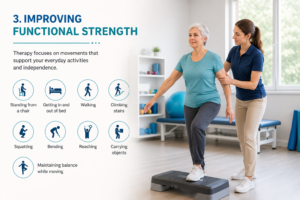
Being able to perform an exercise in a therapy room is useful, but the bigger goal is being able to use that strength in everyday life.
Functional training focuses on movements that have a direct connection to daily activities.
Your therapy program may work on:
- Standing from a chair
- Getting in and out of bed
- Walking
- Climbing stairs
- Squatting
- Bending
- Reaching
- Carrying objects
- Maintaining balance while moving
For older adults or people recovering from significant health challenges, improving these everyday movements can make a meaningful difference in independence.
4. Restoring Balance and Coordination
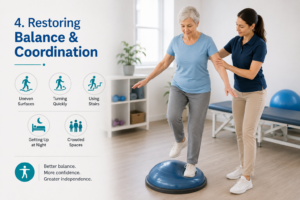
Long periods of inactivity can affect more than muscle strength. Balance and coordination may also decline when a person spends less time walking and moving.
Poor balance can make people feel uncertain when:
- Walking on uneven surfaces
- Turning quickly
- Using stairs
- Getting up at night
- Moving around crowded spaces
Physical therapy can incorporate balance and coordination activities that are appropriate for your current ability.
Improving these skills can help you become more comfortable and controlled during movement.
5. Improving Flexibility and Joint Mobility

Weakness and stiffness often occur together.
When you are inactive, joints may not move through their normal range as frequently as they once did. Muscles can also become less flexible, making certain movements uncomfortable or difficult.
Physical therapists may combine mobility exercises, stretching, and strengthening activities to help improve movement.
Better mobility can make it easier to perform strengthening exercises and return to everyday activities.
6. Rebuilding Endurance

Strength isn’t the only thing that can decline during inactivity. Your ability to sustain physical activity may decrease as well.
You might notice that you become tired after:
- Walking for a short distance
- Preparing a meal
- Shopping
- Cleaning
- Standing for extended periods
- Completing household tasks
Physical therapy can gradually build endurance by increasing activity in manageable steps.
Instead of trying to complete a long workout immediately, your therapist may help you build tolerance through appropriately paced activity.
7. Improving Movement Quality

Getting stronger is important, but how you move matters too.
After an injury or extended period of inactivity, people sometimes develop compensatory movement patterns. For example, someone may shift more weight onto one side, avoid using a painful joint, or rely heavily on other muscles.
A physical therapist can observe these movement patterns and help you work toward better control and mechanics.
This can make everyday movement more efficient and may help reduce unnecessary stress on certain areas of the body.
Physical Therapy Can Help Break the Inactivity Cycle
Inactivity can sometimes create a difficult cycle.
You may feel weak, so you move less.
Because you move less, you become weaker.
As your strength decreases, everyday activities become harder.
When movement becomes difficult, you may become even less active.
Physical therapy can provide a structured way to interrupt that cycle.
Instead of expecting you to suddenly become highly active, therapy introduces manageable movement and gradually builds your capacity.
The focus is on creating progress that you can realistically maintain.
Read More: Home Safety Modifications for Seniors: Simple Ways to Prevent Falls and Injuries
What Can Cause a Long Period of Inactivity?

There isn’t just one reason someone may become inactive.
Common situations include:
Recovery After Surgery
Surgery can temporarily limit movement because of pain, healing requirements, or physician restrictions. Physical therapy can help restore strength and function as recovery progresses.
Injury
Sprains, fractures, muscle injuries, and other conditions can cause people to avoid activity. Once appropriate, rehabilitation can help restore movement and strength.
Illness or Hospitalization
A significant illness or extended hospital stay may leave someone feeling weak and easily fatigued. Returning to normal activity may require a gradual rehabilitation plan.
Chronic Pain
Persistent pain can cause people to avoid movements they believe will make symptoms worse. A physical therapist can help identify appropriate ways to move while addressing strength and functional limitations.
Sedentary Work
Long hours spent sitting at a desk or working from home can reduce daily movement and contribute to stiffness, weakness, and reduced endurance.
Aging and Reduced Activity
As people age, maintaining strength, balance, flexibility, and mobility becomes increasingly important for everyday independence.
How Long Does It Take to Regain Strength?
There is no single recovery timeline that applies to everyone.
How quickly you regain strength can depend on factors such as:
- How long you were inactive
- Your age
- Your previous fitness level
- The reason for inactivity
- Existing injuries or health conditions
- Your current strength and mobility
- How consistently you follow your rehabilitation program
Some people may notice improvements relatively quickly, while others require a longer rehabilitation period.
The important thing is to focus on progress rather than speed.
A gradual improvement in walking distance, exercise tolerance, balance, strength, or ability to complete daily tasks can all represent meaningful progress.
Your Home Exercise Program Matters
Physical therapy sessions are only one part of recovery.
Your therapist may provide exercises or movement strategies to practice between appointments. Following those recommendations consistently can help reinforce the progress made during therapy.
Your home program may include:
- Strengthening exercises
- Stretching
- Balance activities
- Walking
- Mobility exercises
- Posture strategies
- Functional movements
Your therapist can also explain how frequently and how intensely these activities should be performed based on your individual needs.
Consistency is often more useful than trying to make dramatic changes in a short period of time.
When Should You Consider Physical Therapy?
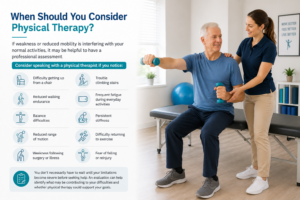
If weakness or reduced mobility is interfering with your normal activities, it may be helpful to have a professional assessment.
Consider speaking with a physical therapist if you notice:
- Difficulty getting up from a chair
- Trouble climbing stairs
- Reduced walking endurance
- Frequent fatigue during everyday activities
- Balance difficulties
- Persistent stiffness
- Reduced range of motion
- Difficulty returning to exercise
- Weakness following surgery or illness
- Fear of falling or reinjury
You don’t necessarily have to wait until your limitations become severe before seeking help.
An evaluation can help identify what may be contributing to your difficulties and whether physical therapy could support your goals.
How Care First Rehab Can Support Your Recovery
At Care First Rehab, physical therapy is designed around the individual. The goal is not simply to complete exercises but to help patients improve the physical abilities they need for everyday life.
Care First Rehab provides physical therapy focused on areas including strength, flexibility, coordination, balance, endurance, and overall functional recovery. The practice also offers in-home therapy, which can be especially helpful for individuals who have difficulty traveling to a traditional therapy setting. (CareFirst PT)
A personalized rehabilitation approach can help you work toward practical goals, whether that means walking more comfortably, becoming more independent at home, returning to exercise, or improving your ability to manage everyday activities.
Read More: Manual Therapy vs. Exercise Therapy: Which Is Better for Orthopedic Recovery?
Frequently Asked Questions
Can physical therapy help after months of inactivity?
Yes. Physical therapy can help individuals gradually work on strength, mobility, balance, endurance, and functional movement after an extended period of reduced activity. The treatment plan should be based on the person’s current abilities and underlying reason for inactivity.
How often should I exercise after being inactive?
The appropriate frequency depends on your current condition, activity level, and goals. A physical therapist can help determine how much activity is appropriate and how quickly exercises should progress.
Is it normal to feel tired when returning to exercise?
Some fatigue can occur when returning to activity after a prolonged break. However, significant or unusual fatigue should not simply be ignored. A healthcare professional can help determine whether your activity level needs to be adjusted.
Can physical therapy help older adults regain strength?
Yes. Physical therapy can address strength, balance, mobility, endurance, and functional activities that are important for maintaining independence as people age.
What if I cannot easily travel to a physical therapy clinic?
Depending on your needs and available services, in-home physical therapy may be an option. Receiving therapy in the home can also allow treatment to address movement challenges within the person’s actual living environment.
Take the First Step Toward Getting Stronger
A long period of inactivity can leave you feeling like you’ve lost abilities you once took for granted. However, reduced strength and mobility don’t have to define your long-term function.
With appropriate guidance, progressive exercise, and consistent effort, you can work toward rebuilding strength, improving movement, increasing endurance, and becoming more confident in your physical abilities.
If inactivity, injury, illness, or recovery has made everyday movement more difficult, Care First Rehab can help you explore your rehabilitation options.
Visit CareFirstPT.com to learn more about physical therapy and other rehabilitation services available through Care First Rehab.