
1. Creates a Personalized Recovery Plan
Every injury is different. Two people with the same condition may require completely different treatment approaches.
A physical therapist performs a detailed evaluation to understand:
- Where the pain is coming from
- Which movements are limited
- Which muscles need strengthening
- What activities you want to return to
Based on this assessment, your therapist creates a personalised recovery program designed around your specific needs.
This targeted approach helps patients make steady progress instead of relying on general exercises that may not address the actual problem.
2. Reduces Pain and Improves Movement
Pain can make you avoid certain movements, which may lead to weakness and stiffness over time.
Physical therapy helps address pain through:
- Mobility exercises
- Strengthening techniques
- Manual therapy
- Movement correction
- Flexibility training
By improving how your body moves, physical therapy can reduce discomfort and help you perform daily activities more comfortably.
3. Restores Strength After Injury
Many injuries result in muscle weakness because of reduced activity or periods of rest.
Physical therapy focuses on rebuilding strength in the affected areas while gradually increasing your ability to move.
Strength training can help improve:
- Muscle stability
- Joint support
- Coordination
- Balance
- Overall physical performance
A gradual strengthening program reduces the risk of reinjury and helps your body handle daily activities better.

4. Helps Athletes Return to Sports Safely
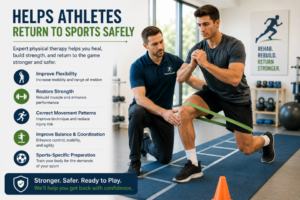
Sports injuries require careful rehabilitation to ensure athletes return safely without risking another injury.
Physical therapy for sports injuries may focus on:
- Improving flexibility
- Restoring strength
- Correcting movement patterns
- Improving balance and coordination
- Preparing the body for sports-specific activities
Whether you are a recreational athlete or a competitive player, a structured rehabilitation plan can help you return to your sport with confidence.
5. Supports Faster Recovery After Surgery
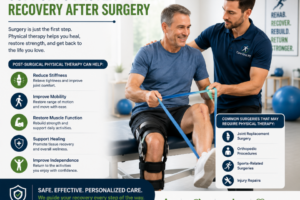
Surgery is often only the first step in recovery. Rehabilitation is essential for restoring normal movement and strength.
Post-surgical physical therapy can help:
- Reduce stiffness
- Improve mobility
- Restore muscle function
- Support healing
- Improve independence
Common surgeries that may require physical therapy include:
- Joint replacement surgery
- Orthopedic procedures
- Sports-related surgeries
- Injury repairs
Working with a physical therapist helps ensure your recovery follows a safe and effective progression.
Read More: Common Speech Disorders in Children Explained
6. Prevents Future Injuries

Recovery is not just about feeling better today — it is also about protecting your body in the future.
Physical therapists identify movement issues that may increase your risk of getting injured again.
Your treatment plan may include:
- Strength improvement
- Balance training
- Posture correction
- Proper movement techniques
- Home exercise programs
Learning how to move correctly helps support long-term health and performance.
7. Helps You Return to Everyday Activities
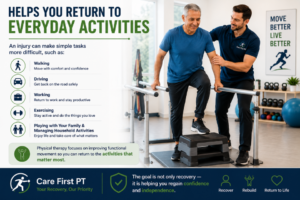
An injury can make simple tasks more difficult, such as:
- Walking
- Driving
- Working
- Exercising
- Playing with your family
- Managing household activities
Physical therapy focuses on improving functional movement so you can return to the activities that matter most.
The goal is not only recovery — it is helping you regain confidence and independence.
Common Injuries Treated With Physical Therapy in Cary, NC
Physical therapy can help patients recovering from many different conditions, including:
Sports Injuries
Examples include:
- Sprains
- Strains
- Muscle injuries
- Ligament injuries
- Overuse injuries
Back and Neck Pain
Physical therapy can help manage:
- Lower back pain
- Neck discomfort
- Postural problems
- Muscle tightness
Joint Pain
Treatment may support recovery from:
- Knee injuries
- Shoulder pain
- Hip problems
- Arthritis-related limitations
Accident and Workplace Injuries
Rehabilitation can help restore function after:
- Auto accidents
- Falls
- Workplace injuries
Read More: At what age should a Child Say Their First Words? A Parent’s Guide
What Happens During Your First Physical Therapy Appointment?
Many patients feel unsure about what to expect during their first visit.
At Care First PT, your initial appointment typically includes:
Comprehensive Evaluation
Your therapist will review your injury history, symptoms, movement limitations, and recovery goals.
Physical Assessment
Your therapist may evaluate:
- Strength
- Flexibility
- Balance
- Mobility
- Functional movement
Customized Treatment Plan
Based on your evaluation, you will receive a treatment plan designed specifically for your recovery.
Progress Monitoring
Your therapist will adjust your program as you improve to ensure continued progress.
Why Choose Care First PT for Physical Therapy in Cary, NC?
At Care First PT, we believe every patient deserves personalised care focused on their unique recovery goals.
Our approach combines professional expertise with patient-focused treatment to help individuals regain mobility, strength, and confidence.
Patients choose Care First PT because we provide:
✔ Individualised rehabilitation programs
✔ Experienced physical therapy care
✔ Focus on long-term recovery
✔ Support for injury prevention
✔ Treatment plans based on personal goals
Whether you are recovering from an injury, surgery, or dealing with ongoing pain, our team is here to support your journey.
Start Your Recovery With Physical Therapy in Cary, NC
Recovering from an injury takes time, but the right support can make the process safer and more effective.
Professional physical therapy in Cary, NC helps patients reduce pain, improve mobility, rebuild strength, and return to the activities they love.
If you are searching for a trusted physical therapist in Cary, NC, Care First PT provides personalised rehabilitation solutions designed around your needs.
Schedule your physical therapy evaluation today and take the first step toward a stronger, healthier recovery.