

Many parents first notice something is different in small ways. Your baby feels “floppy” when you pick them up. They slump when sitting, struggle to hold their head steady, or seem to reach milestones later than other children. When you search online, one term keeps coming up: hypotonia.
Hearing it for the first time can feel overwhelming, but you don’t have to face it alone. Hypotonia is common, it has many possible causes, and early physical therapy can make a real difference in how your child moves, plays, and builds strength. This guide explains what low muscle tone is, what to look for, and how therapy can help.
What Is Hypotonia?
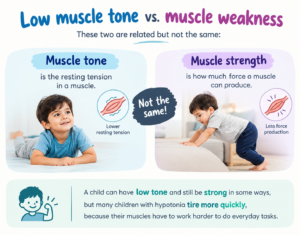
Hypotonia means low muscle tone. Muscle tone is the natural, slight tension in your muscles when they’re at rest. It’s what helps us hold a posture, stay upright, and get ready to move. When tone is low, muscles are less “ready,” so movements take more effort and joints can feel loose.
Low muscle tone vs. muscle weakness
These two are related but not the same:
- Muscle tone is the resting tension in a muscle.
- Muscle strength is how much force a muscle can produce.
A child can have low tone and still be strong in some ways, but many children with hypotonia tire more quickly, because their muscles have to work harder to do everyday tasks.
Read More: Frozen Shoulder Stages and Recovery Timeline: What to Expect
Signs of Hypotonia in Babies
Signs can vary from mild to more noticeable. Common ones in infants include:
- Feeling “floppy” or limp when held, or slipping through your hands when you lift them under the arms
- Poor head control, with the head falling back or to the side longer than expected
- Arms and legs that hang loosely, or a frog-like leg position when lying on the back
- Difficulty with feeding, such as a weak suck, tiring quickly, or trouble coordinating sucking and swallowing
- Less movement than other babies, or a quiet, less active presentation
- Delayed milestones such as rolling, sitting, or crawling
- A weak cry or low endurance
Signs of Hypotonia in Toddlers
As children grow, hypotonia may show up differently:
- Late sitting, crawling, standing, or walking
- A wide-based or unsteady walk, or frequent tripping and falling
- Slouched posture when sitting, such as W-sitting or leaning on furniture
- Getting tired quickly during play and wanting to be carried
- Trouble with jumping, climbing stairs, or keeping up with peers
- Difficulty with fine motor skills such as grasping, stacking, or using utensils
- Joints that seem unusually flexible
- Speech or feeding challenges, since the muscles of the mouth and face are affected too
Having one or two of these doesn’t mean your child has hypotonia. A pediatrician or pediatric therapist can look at the full picture.
What Causes Low Muscle Tone?
Hypotonia is a symptom, not a diagnosis. It can have many different causes, and sometimes the cause isn’t found. Possible causes include:
- Genetic conditions, such as Down syndrome and Prader-Willi syndrome
- Neurological conditions, including some forms of cerebral palsy
- Muscle and nerve conditions, such as spinal muscular atrophy or muscular dystrophies
- Metabolic or other medical conditions
- Premature birth or birth-related complications
- Benign (non-serious) congenital hypotonia, where tone is low but the child gradually improves
Finding the cause is a medical process led by your child’s doctor, and it may involve a pediatrician, neurologist, or geneticist. Physical therapy works alongside that process. A child doesn’t need a diagnosis to begin benefiting from therapy.

How Is Hypotonia Evaluated?
Your pediatrician will usually start by reviewing your child’s history, development, and a physical exam. Depending on what they find, they may refer you to specialists or order tests.
A pediatric physical therapist adds an evaluation of how your child actually moves. This may include looking at:
- Head and trunk control
- Posture and joint flexibility
- Strength and endurance
- Rolling, sitting, crawling, standing, and walking skills
- How your child plays and moves through daily routines
This helps create a clear picture of your child’s strengths and the areas where they need support.
Read More: Autism in Children: Signs, Symptoms, Treatment & How Therapy Can Help
How Pediatric Physical Therapy Helps

Therapy for hypotonia isn’t about “fixing” a child. It’s about helping them move with more confidence, build strength and endurance, and reach their next milestone in the best way possible. Every plan is individual, but it may include:
- Strengthening play, using games and positions that build the core, back, and limb muscles
- Postural control and balance training, so sitting and standing feel more stable
- Milestone support, with guided practice for rolling, sitting, crawling, pulling to stand, and walking
- Endurance building, so your child can play longer without getting tired
- Positioning and handling tips for feeding, carrying, and playtime
- Support for movement quality, to help protect joints that are flexible
- Parent coaching, since the daily routines at home are where much of the progress happens
Therapists use play-based, age-appropriate activities, so sessions feel like fun rather than “exercise.”
Why early support matters
Young children are learning and developing quickly. Starting therapy early gives your child more opportunities to practice and build skills during these important years, and it gives you tools to support them every day.
The Whole-Child Approach: PT, OT, and Speech Together
Low muscle tone can affect more than gross motor skills. Because it can involve the muscles throughout the body, some children also benefit from other therapies:
- Physical therapy for rolling, sitting, crawling, walking, balance, and strength
- Occupational therapy for fine motor skills, hand strength, self-care, and play skills
- Speech therapy for feeding, sucking, swallowing, and early communication when the mouth and face muscles are involved
A team approach is helpful, and having all three under one roof can simplify things for families.
Simple Ways to Support Your Child at Home
These are general ideas, and your child’s therapist can tailor them for your child.
- Make tummy time part of your day, in short, frequent sessions while your baby is awake and supervised. Read our guide to [tummy time].
- Offer floor play with toys placed slightly out of reach to encourage reaching and rolling
- Support, but don’t over-support. Give just enough help for your child to try the movement on their own.
- Vary positions during play, such as side-lying, sitting with support, and supervised time on the tummy
- Choose supportive seating and avoid long periods in containers such as bouncers and swings, which limit movement practice
- Celebrate small wins. Progress may be gradual, and every new skill counts.
Always follow your pediatrician’s and therapist’s guidance, especially for premature babies or children with medical conditions.
When to Talk to Your Pediatrician
Bring up your concerns if your baby or toddler:
- Feels unusually floppy or has poor head control after the first few months
- Is not rolling, sitting, crawling, or walking around the expected times
- Has feeding difficulties or a very weak suck
- Seems to lose skills they once had
- Tires easily or seems far less active than other children
Seek urgent medical care right away if your baby becomes suddenly limp or very floppy, is hard to wake, has trouble breathing, or is feeding very poorly along with other concerning symptoms.
You know your child best. If something feels off, it’s always okay to ask, and you don’t need to wait and see.
Early Intervention in North Carolina

Children from birth to age 3 with developmental delays or certain conditions may qualify for early intervention services through North Carolina’s early intervention program. Your pediatrician or our team can help point you in the right direction, and you can ask about eligibility and referral options for your child.
How Care First Rehab Can Help
At Care First Rehab in Cary, NC, our pediatric therapy team supports babies, toddlers, and children with movement and developmental needs. Our approach includes:
- A thorough evaluation of your child’s movement, strength, and development
- Play-based, family-centered therapy with a plan tailored to your child
- Parent coaching and home programs so you feel confident supporting progress between visits
- Coordinated care across physical, occupational, and speech therapy when your child needs it
- In-home therapy and telemedicine options for families who need flexibility
- Two convenient Cary locations
We’ll work with you and your child’s doctor to create a plan that fits your child and your family.
Read More: Physical Therapy vs. Chiropractor: Which One Do You Need?
Frequently Asked Questions
Is hypotonia a disease?
No. Hypotonia is a sign of an underlying condition or difference in how the muscles and nervous system work. In some children, no specific cause is found.
Will my child outgrow low muscle tone?
It depends on the cause. Some children improve significantly over time, while for others low tone is a lifelong feature. In either case, therapy can help your child build skills and function as well as possible.
What’s the difference between hypotonia and a child just being a late bloomer?
Every child develops at their own pace, so some variation is normal. If your child is consistently behind in several areas or feels very floppy, an evaluation can give clarity and peace of mind.
Does my child need a diagnosis before starting physical therapy?
No. Therapy is based on what your child needs in terms of movement and development, even if medical testing is still underway.
How often will my child need therapy?
It varies based on your child’s needs and goals. Your therapist will recommend a plan after the evaluation and adjust it as your child grows.
Can I do anything at home to help?
Yes. Daily play, tummy time, floor time, and positioning can all support progress, and your therapist can give you personalized activities.
Your Child’s Progress Starts With the Next Step
If you’re noticing signs of low muscle tone or you’re simply worried about your child’s development, an evaluation can bring answers and a plan. Early support can help your child grow stronger and more confident.
Call Care First Rehab at 919-460-1921 or [book an evaluation online] to talk with our pediatric therapy team.