
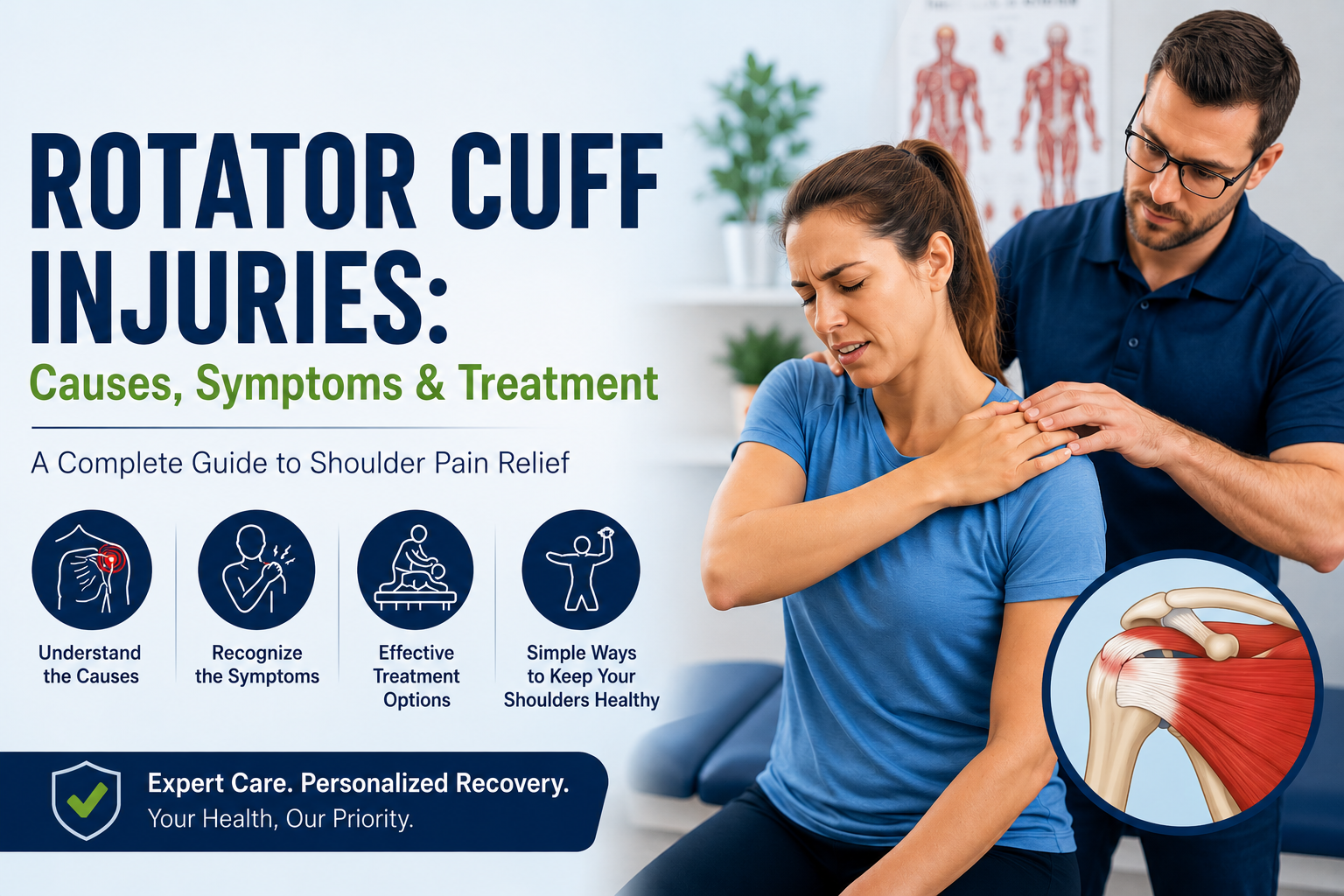
Shoulder pain is one of the most common reasons people visit a physical therapist or doctor. It can affect anyone—from athletes and gym-goers to office workers and older adults. Even simple tasks like brushing your hair, reaching into a cabinet, lifting groceries, or sleeping on your side can become painful when your shoulder isn’t working properly.
One of the most common causes of shoulder pain is a rotator cuff injury. These injuries often happen because of overuse, aging, poor posture, or a sudden accident. The good news is that many rotator cuff injuries can be treated successfully with physical therapy, exercise, and lifestyle changes.
In this guide, we’ll explain what the rotator cuff is, what causes injuries, the symptoms to watch for, treatment options, and simple ways to keep your shoulders healthy.
What Is the Rotator Cuff?
The rotator cuff is a group of four muscles and tendons that surround your shoulder joint. These muscles work together to keep your shoulder stable while allowing it to move in many different directions.
Your rotator cuff helps you:
- Lift your arm
- Reach overhead
- Throw a ball
- Push and pull objects
- Rotate your shoulder
- Perform everyday activities like getting dressed or carrying groceries
Because your shoulder has one of the widest ranges of motion in the body, the rotator cuff works hard every day. Over time, this constant use can lead to irritation or injury.
What Causes Rotator Cuff Injuries?
Rotator cuff injuries can happen suddenly or develop slowly over time.
1. Repetitive Movements
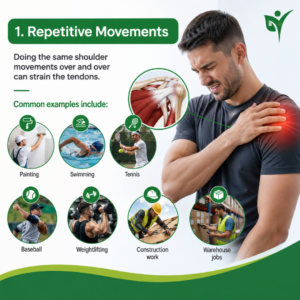
Doing the same shoulder movements over and over can strain the tendons.
Common examples include:
- Painting
- Swimming
- Tennis
- Baseball
- Weightlifting
- Construction work
- Warehouse jobs
2. Aging
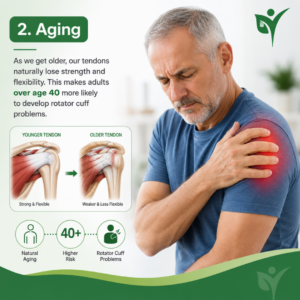
As we get older, our tendons naturally lose strength and flexibility. This makes adults over age 40 more likely to develop rotator cuff problems.
3. Poor Posture
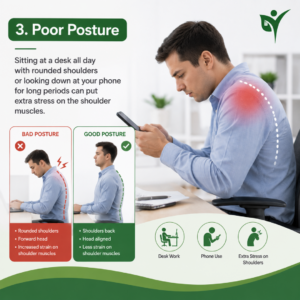
Sitting at a desk all day with rounded shoulders or looking down at your phone for long periods can put extra stress on the shoulder muscles.
4. Sudden Injuries
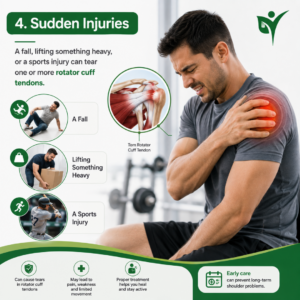
A fall, lifting something heavy, or a sports injury can tear one or more rotator cuff tendons.
5. Muscle Weakness
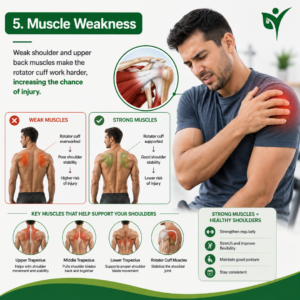
Weak shoulder and upper back muscles make the rotator cuff work harder, increasing the chance of injury.
Common Symptoms of a Rotator Cuff Injury
Symptoms may start slowly or appear suddenly after an injury.
Some of the most common signs include:
- Shoulder pain when lifting your arm
- Pain while reaching overhead
- Weakness in the shoulder
- Difficulty carrying heavy objects
- Pain when sleeping on the affected side
- Clicking or popping sounds during movement
- Stiffness
- Limited range of motion
Some people notice the pain only during activity, while others experience discomfort even when resting.

Is It Normal for Shoulder Pain to Get Worse at Night?
Yes. Many people with rotator cuff injuries notice their pain becomes worse at night, especially when lying on the injured shoulder.
This happens because pressure increases around the irritated tendons, making it difficult to find a comfortable sleeping position.
Types of Rotator Cuff Injuries
Rotator Cuff Tendinitis
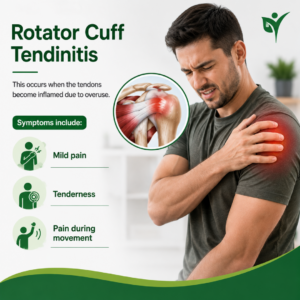
This occurs when the tendons become inflamed due to overuse.
Symptoms include:
- Mild pain
- Tenderness
- Pain during movement
Shoulder Bursitis
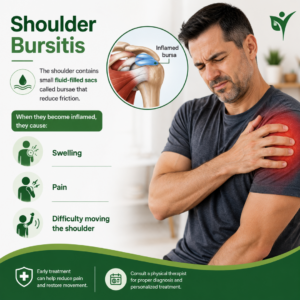
The shoulder contains small fluid-filled sacs called bursae that reduce friction.
When they become inflamed, they cause:
- Swelling
- Pain
- Difficulty moving the shoulder
Rotator Cuff Tear
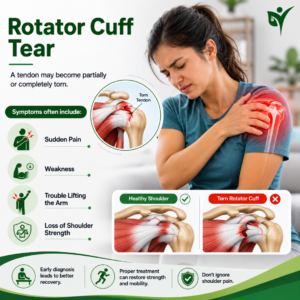
A tendon may become partially or completely torn.
Symptoms often include:
- Sudden pain
- Weakness
- Trouble lifting the arm
- Loss of shoulder strength
Who Is Most at Risk?
Anyone can develop a rotator cuff injury, but the risk is higher if you:
- Are over 40 years old
- Play overhead sports
- Work in construction or painting
- Lift heavy objects regularly
- Have poor posture
- Perform repetitive shoulder movements every day
How Is a Rotator Cuff Injury Diagnosed?
A healthcare provider or physical therapist will begin by asking about your symptoms and daily activities.
During your exam, they may check:
- Shoulder movement
- Muscle strength
- Range of motion
- Painful movements
If needed, imaging tests such as an X-ray, ultrasound, or MRI may be recommended to determine the extent of the injury.
Read More: Finding the Right Physical Therapist in Cary, NC: What Patients Should Know
Can Rotator Cuff Injuries Heal Without Surgery?
Yes. Many rotator cuff injuries improve with conservative treatment.
Depending on the severity of the injury, your provider may recommend:
- Rest
- Ice therapy
- Anti-inflammatory medication
- Physical therapy
- Home exercise programs
- Activity modification
Many people recover without surgery, especially if treatment begins early.
How Physical Therapy Helps
Physical therapy is one of the most effective treatments for shoulder pain caused by rotator cuff injuries.
Your physical therapist will create a personalized treatment plan based on your condition.
Treatment may include:
Pain Relief Techniques
These may involve:
- Manual therapy
- Gentle stretching
- Ice or heat therapy
- Soft tissue mobilization
Strengthening Exercises
Exercises focus on strengthening:
- Rotator cuff muscles
- Shoulder blade muscles
- Upper back
- Core muscles
Stronger muscles provide better support for the shoulder joint.
Improving Flexibility
Stretching exercises help restore normal movement and reduce stiffness.
Posture Training
Improving posture reduces pressure on the shoulder and helps prevent future injuries.
Education
You’ll learn how to perform daily activities safely while protecting your shoulder during recovery.
Read More: 7 Ways Physical Therapy in Cary, NC Helps You Recover Faster
Simple Exercises That May Help
Always check with your healthcare provider before starting any exercise program.
Some commonly recommended exercises include:
- Pendulum swings
- Wall slides
- Shoulder blade squeezes
- External rotation with a resistance band
- Doorway chest stretch
These exercises are often introduced gradually as pain improves.
Recovery Time
Recovery depends on the type and severity of the injury.
Typical recovery times include:
- Mild inflammation: 2–6 weeks
- Moderate overuse injuries: 6–12 weeks
- Partial tears: Several months
- Surgical recovery: 4–6 months or longer
Following your treatment plan consistently plays a major role in your recovery.
Tips to Prevent Shoulder Injuries
Keeping your shoulders healthy doesn’t have to be complicated.
Here are a few simple habits that can make a big difference:
- Warm up before exercise or sports.
- Stretch regularly to maintain flexibility.
- Strengthen your shoulder and upper back muscles.
- Practice good posture while sitting and standing.
- Avoid lifting objects above shoulder height whenever possible.
- Take breaks during repetitive work.
- Increase workout intensity gradually instead of doing too much too soon.
Small changes in your daily routine can help reduce stress on your shoulders and lower your risk of future injuries.
When Should You See a Physical Therapist?
Don’t ignore shoulder pain that lasts more than a few weeks.
Schedule an evaluation if you experience:
- Pain that doesn’t improve
- Difficulty lifting your arm
- Shoulder weakness
- Pain while sleeping
- Limited movement
- Pain after a fall or sports injury
Getting treatment early often leads to faster recovery and helps prevent long-term problems.
Frequently Asked Questions
Can a rotator cuff injury heal on its own?
Minor inflammation may improve with rest and physical therapy. Larger tears usually require medical evaluation and may need surgery depending on the severity.
Should I exercise if my shoulder hurts?
Some exercises can help, while others may make the injury worse. Always follow a treatment plan recommended by your healthcare provider or physical therapist.
Can poor posture really cause shoulder pain?
Yes. Poor posture changes the way your shoulder moves and places extra stress on the rotator cuff muscles and tendons.
Is shoulder pain always caused by a rotator cuff injury?
No. Shoulder pain can also result from arthritis, frozen shoulder, bursitis, nerve problems, or injuries to other parts of the shoulder.
Final Thoughts
Shoulder pain can make everyday activities frustrating, but it doesn’t have to control your life. Many rotator cuff injuries are caused by overuse, poor posture, or age-related wear and tear, and with the right treatment, most people can return to their normal activities.
Physical therapy is often one of the best ways to reduce pain, improve strength, and restore movement without surgery. By recognizing the symptoms early, following a personalized treatment plan, and taking steps to protect your shoulders, you can recover more quickly and lower your risk of future injuries.
If your shoulder pain is affecting your daily routine, don’t wait for it to get worse. An early evaluation and the right care can help you get back to doing the activities you enjoy with less pain and greater confidence.
Frequently Asked Questions (FAQs)
1. What is a rotator cuff injury?
A rotator cuff injury occurs when one or more of the muscles or tendons that stabilize the shoulder become inflamed, strained, or torn. It can develop from repetitive movements, aging, or a sudden injury.
2. What are the most common symptoms of a rotator cuff injury?
Common symptoms include shoulder pain, weakness, difficulty lifting your arm, pain when reaching overhead, limited range of motion, and discomfort while sleeping on the affected side.
3. Can a rotator cuff injury heal without surgery?
Yes. Many mild to moderate rotator cuff injuries improve with rest, physical therapy, activity modification, and guided exercises. Surgery is usually considered only for severe or complete tears that do not respond to conservative treatment.
4. How can physical therapy help shoulder pain?
Physical therapy helps reduce pain, improve shoulder mobility, strengthen the rotator cuff muscles, correct posture, and restore normal function. A personalized treatment plan can also lower the risk of future shoulder injuries.
5. When should I see a physical therapist for shoulder pain?
You should seek professional care if your shoulder pain lasts more than a few weeks, limits your daily activities, causes weakness, wakes you up at night, or follows a fall or sports-related injury. Early treatment can improve recovery and help prevent long-term complications.