

Watching your baby grow and reach new milestones is one of the most exciting parts of parenthood. From lifting their head to rolling over and eventually walking and crawling — every developmental step feels like a celebration. But what happens when your little one isn’t hitting these major milestones on time? That’s where knowing developmental red flags for walking and crawling becomes essential. Understanding these signs and knowing when to seek help — especially with the support of physical thearphy — can ensure your child gets the best start in life.
You Can Read Also : Cardiac Rehab: Safe Exercises to Strengthen Your Heart After Surgery
Understanding Typical Movement Milestones
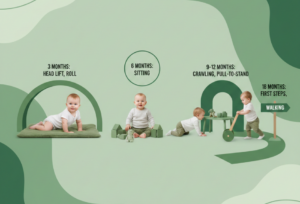
Babies grow at different rates, but pediatricians use general milestone timelines to guide expectations:
- Crawling: Most babies begin to crawl between 6–10 months.
- Pulling up to stand: Around 9–12 months.
- Cruising (walking while holding onto furniture): Around 9–12 months.
- Independent walking: Most children walk by 12–15 months.
Missing these windows doesn’t always mean something is wrong — but it can be worth further evaluation.
Red Flags in Crawling
Crawling is more than just forward motion — it builds strength, coordination, and spatial awareness. Watch for these red flags:
Not Attempting to Move Forward
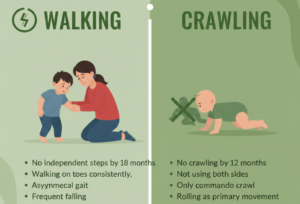
If your baby shows little or no effort to crawl by 10 months, it may be a sign of muscle weakness or coordination challenges.
Asymmetric or One-Sided Movement
Pushing more with one arm or leg or scooting using only one side can indicate developmental concerns.
Limited Use of Arms or Legs
If your baby seems hesitant to put weight on hands or knees, it may reflect motor control delays that could benefit from physical thearphy evaluation.
Red Flags in Walking
Walking is a complex skill that requires balance, strength, and coordination. Look out for the following:
Not Trying to Stand by 12 Months
If your baby isn’t attempting to pull up or stand with support around their first birthday, it might be time to talk to a professional.
Frequent Falling or Poor Balance
Some falls are normal — but consistent trouble maintaining balance or walking unsteadily after 15–18 months can be concerning.
Walking on Toes
Occasional toe walking can be normal, but persistent toe walking (beyond 18 months) should be checked.
One Side Stronger Than the Other
Gait asymmetry or favoring one side may signal neuromuscular issues.
When to Worry — and When to Act
If your child displays one or more red flags, early intervention is key.
Schedule a Pediatric Check-Up
Your child’s pediatrician can assess development and recommend next steps.
Consider Early Intervention Services
These services are available in many areas and can include support from physical therapists.
Evaluate with Specialized physical thearphy
A pediatric physical thearphy expert can assess strength, balance, coordination, and motor skill development — and create a customized treatment plan to support your child’s growth.
You Can Read Also : The Truth About Tummy Time: Why It Matters in Physical Therapy for Your Baby
How Physical Therapy Helps
Pediatric physical thearphy goes beyond encouraging movement. It focuses on:
- Strengthening muscles needed for movement
- Improving balance and coordination
- Enhancing body awareness
- Encouraging developmental progress through safe, fun activities
Parents also learn techniques to support practice at home, creating a powerful team approach to development.
Conclusion
It’s normal for babies to reach milestones at their own pace. However, recognizing signs of delayed crawling or walking helps ensure your child gets the support they need — especially through tailored physical thearphy when appropriate. If any developmental red flags concern you, don’t hesitate to talk to a pediatrician and explore early intervention options. Prompt action empowers your child to grow with confidence and strength.
Frequently Asked Questions (FAQs)
When should my baby start crawling?
Around 6 to 10 months, many babies begin their exciting crawling journey.
Is it normal for a baby to skip crawling and go straight to walking?
Some babies do skip traditional crawling, but if they’re not exploring movement in other ways, an evaluation may be helpful.
What age should I worry if my child isn’t walking?
If your child isn’t pulling up or trying to stand by 12 months, or walking independently by 15–18 months, talk to your pediatrician
How can phiscal thearphy help my child walk?
Pediatric phiscal thearphy focuses on strength, coordination, balance, and confidence-building to support safe, successful walking.
Are early intervention services covered by insurance?
Coverage varies by plan and region, but many insurance plans and early intervention programs offer support for developmental services including phiscal thearphy.