

When children begin learning to speak, it is completely normal for their speech to sound imperfect. Many parents notice their child repeating words, pausing often, or struggling to finish sentences. This often raises concerns about whether the child is experiencing normal speech development or a more serious issue such as stuttering.
Understanding the difference between stuttering and normal disfluency is important for parents. Early identification and speech therapy can help children develop stronger communication skills and prevent long-term speech difficulties.
In this blog, we will explain the key differences between stuttering and normal disfluency, when parents should seek help, and how speech therapy can support a child’s communication development.
What Is Normal Disfluency in Children?

Normal disfluency is a common part of language development, especially in children between the ages of 2 and 5 years. During this stage, children are learning new vocabulary and forming longer sentences, which can sometimes cause small interruptions in their speech.
Examples of normal disfluency include:
- Repeating words like “I want, I want that toy.”
- Using fillers such as “um” or “uh”
- Pausing while thinking about what to say
- Restarting sentences
These speech patterns usually appear when a child is excited, tired, or trying to express complex ideas.
In most cases, normal disfluency disappears naturally as the child’s language skills improve. However, monitoring these patterns is important to ensure they do not develop into a fluency disorder.
If parents are unsure, consulting a speech-language pathologist for guidance or early speech therapy evaluation can provide clarity.
You Can Read Also : Developmental Red Flags: When to Worry About Walking and Crawling | physical thearphy
What Is Stuttering?
Stuttering is a speech disorder that affects the flow of speech. Children who stutter may struggle to produce sounds smoothly, which can make communication difficult.
Common signs of stuttering include:
- Repeating sounds such as “b-b-b-ball”
- Prolonging sounds like “sssssnake”
- Getting stuck while speaking
- Visible tension in the face or throat
- Avoiding speaking situations
Unlike normal disfluency, stuttering tends to occur more frequently and consistently. It may also cause frustration or embarrassment for the child.
Early speech therapy plays a crucial role in helping children manage stuttering and improve their speech fluency.
Key Differences Between Stuttering and Normal Disfluency
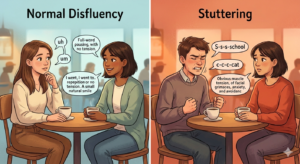
Understanding the differences can help parents decide when professional help is needed.
1. Type of Repetition
Children with normal disfluency typically repeat whole words or phrases.
Children who stutter often repeat individual sounds or syllables.
2. Frequency
Normal disfluency happens occasionally, especially when children are learning new words.
Stuttering occurs more frequently and may worsen over time without speech therapy.
3. Physical Struggle
Children with normal disfluency speak without visible tension.
Children who stutter may show facial tension, blinking, or body movements while speaking.
4. Emotional Reaction
Normal disfluency rarely causes distress.
Stuttering can make children feel frustrated or anxious about speaking.
If these signs persist, a speech therapy assessment can determine whether the child needs professional support.
You Can Read Also : Cardiac Rehab: Safe Exercises to Strengthen Your Heart After Surgery
When Should Parents Consider Speech Therapy?
Many children experience temporary speech interruptions during development. However, parents should consider speech therapy if they notice the following:
- Speech disruptions lasting more than six months
- Increased repetition or sound prolongation
- Visible tension while speaking
- Avoidance of talking situations
- Family history of stuttering
A qualified speech-language pathologist can evaluate the child’s speech patterns and recommend appropriate speech therapy techniques.
Early speech therapy for kids significantly improves fluency and communication confidence.
How Speech Therapy Helps Children with Stuttering

Speech therapy is one of the most effective ways to help children improve their speech fluency and communication skills.
A speech-language pathologist may use several techniques during speech therapy, including:
1. Fluency Shaping Techniques
These exercises help children speak slowly and smoothly.
2. Breathing and Relaxation Strategies
Children learn to control breathing and reduce tension while speaking.
3. Communication Confidence Building
Therapists encourage children to express themselves freely without fear of mistakes.
4. Parent Training
Parents are taught strategies to support their child’s speech development at home.
With regular speech therapy sessions, many children show significant improvement in speech clarity and confidence.
Tips for Parents to Support Speech Development at Home

Parents play an important role in supporting a child’s communication development alongside speech therapy.
Here are some helpful tips:
- Speak slowly and clearly with your child
- Give your child enough time to finish sentences
- Avoid interrupting or correcting harshly
- Encourage relaxed conversations
- Create a calm speaking environment
These simple steps can complement professional speech therapy and improve speech fluency.
You Can Read Also : The Truth About Tummy Time: Why It Matters in Physical Therapy for Your Baby
Why Early Speech Therapy Matters
Early intervention is extremely important when dealing with speech difficulties. When stuttering is addressed early through speech therapy, children are more likely to develop strong communication skills.
Ignoring persistent speech problems can sometimes lead to speech anxiety, low confidence, or academic challenges later in life.
By seeking speech therapy early, parents can ensure their child receives the right support during critical stages of language development.
Conclusion
Speech interruptions are common during early childhood, but understanding the difference between normal disfluency and stuttering is essential for parents.
While normal disfluency usually disappears naturally, persistent stuttering may require professional help. Early evaluation and speech therapy can make a significant difference in a child’s communication abilities.
If you notice frequent speech disruptions or signs of struggle while speaking, consulting a speech-language pathologist for speech therapy can provide the guidance and support your child needs to communicate confidently.
FAQs
1. What is the difference between stuttering and normal disfluency?
Normal disfluency occurs when children repeat words or pause while learning to speak. Stuttering involves repeating sounds, prolonging words, or struggling to speak, and may require professional speech therapy.
2. At what age should parents seek speech therapy for stuttering?
If speech disruptions last more than six months or worsen over time, parents should consult a speech specialist. Early speech therapy can improve fluency and communication skills.
3. Can speech therapy completely cure stuttering?
Many children show significant improvement with consistent speech therapy. Early intervention and regular practice can help children speak more fluently and confidently.
4. How long does speech therapy for children usually take?
The duration of speech therapy depends on the child’s condition. Some children improve within a few months, while others may need longer therapy for lasting results.
5. Can I book a speech therapy session or pre-schedule therapy for my child?
Yes, many clinics allow parents to book or pre-schedule speech therapy sessions in advance for proper evaluation and treatment planning. You can check available therapy services and schedule an appointment through https://carefirstpt.com/.